
Plowing a garden is the most effective way to turn compacted soil into a fertile, weed-free planting bed. Knowing how to plow a garden properly ensures you bury weeds, aerate the soil, and create ideal conditions for root development. Whether you’re using a compact tractor in a backyard plot or preparing a larger field, the right technique makes all the difference. This guide walks you through selecting equipment, setting up your plow, making clean passes, and troubleshooting common issues—so you can achieve professional results without frustration.
You’ll learn how to match your tractor to the right plow, use coulters to handle tough vegetation like kudzu, adjust depth for optimal performance, and drive in the furrow to maintain balance. With sharp moldboards, proper leveling, and just two passes, you can fully invert the soil and prepare a uniform seedbed—giving your crops the best start possible.
Choose the Right Plow for Your Garden Size and Soil

Match Plow Size to Garden Area
For gardens under ½ acre, a single-bottom plow is ideal. It requires less tractor power, fits in tight spaces, and is easier to control with sub-compact tractors (25–35 HP). If you’re working 1 acre or more, upgrade to a two-bottom plow with 12-inch moldboards. This doubles your efficiency and cuts preparation time in half.
Larger plows demand more from your tractor. A 50 HP Kubota can handle a two-bottom plow, but only if it has enough weight and traction. Light tractors with R4 tires may struggle in dense or weedy soil—especially without added ballast.
Select the Correct Moldboard Width
Standard 12-inch moldboards are designed to cut and invert a full slice of soil, balancing depth and turnover without overloading the tractor. Ensure the moldboards are sharp and free of rust or buildup. Dull edges increase resistance and reduce turnover, making plowing harder and less effective.
In rocky or root-filled ground, consider a 10-inch plow to reduce strain. But for most home gardens and fields, 12-inch moldboards deliver the cleanest cut and best soil inversion.
Install Coulters for Tough Vegetation
When plowing land overtaken by wire grass, crabgrass, or kudzu, install coulters—sharp, disc-like blades mounted ahead of the moldboards. They slice through roots and vines before the soil is turned, preventing material from wrapping around the plow beam.
Without coulters, fibrous weeds can clog the plow, slow progress, and strain the tractor. Position coulters to cut 2–3 inches deep, just ahead of the moldboard. Keep them sharpened for smooth operation and reduced drag.
Set Up Your Tractor and Plow for Maximum Efficiency
Use R1 Tires or Add Ballast for Better Traction
Your tractor’s tires significantly impact performance. R4 tires, common on compact tractors, are durable but offer less grip in soft soil. For plowing, R1 agricultural tires are superior—their deep, angled treads dig in and reduce wheel slip.
If you must use R4 tires, add ballast weight to the rear wheels or frame. Extra weight improves ground contact and pulling power—especially critical when using a two-bottom plow on heavy soil.
Adjust the Hitch Pin for Level Plowing
Attach the plow to your tractor’s three-point hitch, then level the plow frame using the offset hitch pin. During the first pass, the plow will naturally tilt as the tractor rides on uneven ground. After the first turn, re-adjust the hitch pin so the plow sits level when the tractor is in the furrow.
An unlevel plow creates uneven furrows—one side too deep, the other too shallow. Proper leveling ensures consistent soil turnover and reduces strain on the tractor and implement.
Set Depth with Position Control or Gauge Wheel
Your depth control method depends on your tractor’s lift system:
- Position control lift: Lower the plow to 6–8 inches, then lock it in place. The system maintains depth automatically—no gauge wheel needed.
- Up/down lift system: Use a gauge wheel to maintain consistent depth. It rides on the unplowed ground and prevents the plow from diving or rising.
Start shallow (4–6 inches) in tough soil, then go deeper on subsequent passes. Never force the plow—adjust depth based on how the tractor responds.
Make the First Plowing Pass to Establish the Furrow
Create the Initial Furrow Along the Garden Edge
Begin at one edge of your garden and lower the plow slowly into the soil. The moldboard will cut and turn the earth, creating the first furrow. Expect the tractor to tilt slightly—this is normal, as the unplowed side remains higher.
This imbalance is temporary. The first pass sets the pattern, and the furrow will stabilize on the next round. Drive straight and maintain steady speed to ensure clean, even slicing.
Monitor Soil Resistance and Clean the Plow
As you plow, watch for signs of strain. If the engine labors or wheels slip, reduce depth or add weight. Check frequently for roots, rocks, or soil clumps stuck to the moldboards.
Stop every few passes to clean the plow. A clean surface cuts more efficiently and reduces drag. Dull or clogged blades increase resistance and decrease turnover.
Drive in the Furrow on the Second Pass for Balanced Operation
Restore Tractor Balance by Riding in the First Furrow
On the second pass, drive the tractor’s rear wheels into the furrow created by the first pass. This centers the tractor over the turned soil and restores balance. The plow will now sit level, and the tractor won’t tilt.
This technique is essential for smooth, efficient plowing. It ensures consistent depth and width across all furrows, creating a uniform seedbed.
Complete Four Soil Turns for Full Vegetation Burial
After two full passes, you’ll achieve four soil turns—two from each side. This fully inverts the surface layer, burying all grass, weeds, and crop residue under 6–8 inches of soil. The top now consists of clean, loose dirt, ideal for planting.
The buried organic matter will decompose, enriching the soil. You’ll also see improved aeration and water infiltration—key for strong root growth.
Handle Tough Vegetation and Challenging Soil Conditions
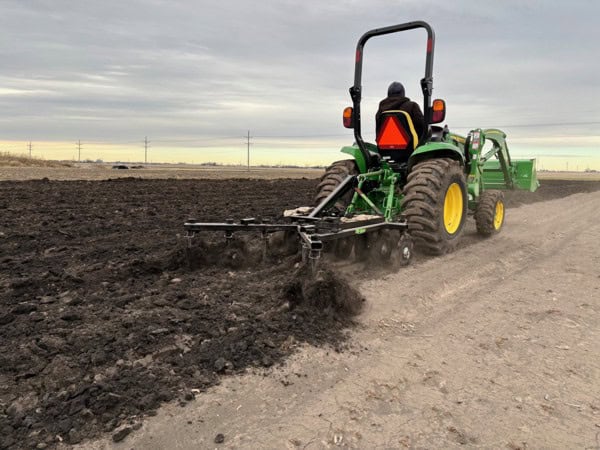
Clear Kudzu, Crabgrass, and Vines with Coulters
Dense, viney ground cover like kudzu or wire grass can wrap around the plow beam and stop progress. Coulters are essential—they slice through roots before the moldboard lifts the soil, preventing clogs.
If you don’t have coulters, make a shallow first pass (3–4 inches) to break up vegetation, then go deeper on the next round. This reduces the load and keeps the plow running clean.
Adjust for Heavy or Rocky Soil
Clay-heavy or compacted soil resists cutting. If the plow drags or the tractor strains:
• Reduce depth to 4–5 inches
• Add rear weight for better traction
• Sharpen moldboards for cleaner cutting
• Plow when soil is moist but not wet—too dry is hard to cut; too wet causes clumping
Avoid rocky areas if possible. If unavoidable, slow down and inspect the plow frequently. A large stone can bend a share or damage the moldboard.
Maintain Equipment During Plowing for Smooth Operation
Keep Moldboards Clean and Sharp
After every 1–2 passes, stop and inspect the plow. Remove any soil, roots, or debris stuck to the moldboards. A clean surface turns soil more efficiently and reduces drag.
Sharpen the leading edge of the moldboard with a grinder if it becomes dull. A sharp edge cuts cleanly through soil and roots, requiring less power and delivering better turnover.
Check Levelness and Hitch Security
After the first turn, recheck plow levelness while the tractor is in the furrow. An unlevel plow leads to uneven furrows and poor performance.
Also, ensure all hitch pins and hydraulic connections are secure. Vibration during plowing can loosen bolts or cause pins to shift.
Monitor Tire Pressure and Traction
Check rear tire pressure before starting—typically 12–15 PSI for field work. If wheels spin, lower pressure slightly (but not below manufacturer specs) to increase the contact patch.
If slippage continues, add wheel weights or liquid ballast to the tires. More weight means better grip and less strain on the engine.
Optimize Plowing for Different Garden Sizes
Plow Small Gardens with a Single-Bottom Plow
For home gardens (10’x20’ up to ½ acre), a single-bottom plow is sufficient. It’s easier to maneuver, requires less power, and works well with sub-compact tractors.
Make parallel passes, overlapping slightly to ensure full coverage. Turn at the end with a wide arc to avoid tearing soil.
Prepare Large Fields Efficiently with a Two-Bottom Plow
For 1 acre or more, use a two-bottom plow. It covers twice the width per pass, cutting your time in half. Requires a 50 HP or heavier tractor with good weight and R1 tires.
Align the plow so the furrows run parallel to the longest side of the field. This minimizes turns and maximizes efficiency.
Adapt for Challenging Terrain
On sloped or uneven ground, plow across the slope (not up and down) to reduce soil erosion. On very steep land, consider strip plowing or using a tiller instead.
If the soil is full of tree roots or stumps, clear the area first or use a root plow. Standard moldboard plows can be damaged by large obstacles.
Achieve Ideal Soil Conditions for Planting
Create a Clean, Deep Seedbed
After two passes, your garden should have deep, uniform furrows with all vegetation buried. The soil will be loose, aerated, and ready for the next step—harrowing or disking to break up clods.
If you plan to plant immediately, run a drag harrow or spike tooth harrow to level the surface and create a fine tilth.
Promote Long-Term Soil Health
Plowing improves soil structure over time. Buried organic matter decomposes, adding nutrients. Aeration allows roots to penetrate deeply, and improved drainage prevents waterlogging.
Avoid over-plowing. Excessive tillage can destroy soil structure and reduce organic content. Rotate plowing with no-till or reduced-till years to maintain soil health.
Troubleshoot Common Plowing Problems

Tractor Strains or Loses Traction
• Cause: Insufficient weight, R4 tires, or excessive depth
• Fix: Add ballast, switch to R1 tires, or reduce plowing depth
Plow Drags or Won’t Penetrate
• Cause: Dull moldboards, compacted soil, or clogged frame
• Fix: Sharpen blades, install coulters, or make a shallow first pass
Uneven Furrows
• Cause: Unlevel plow or incorrect hitch adjustment
• Fix: Re-level using offset hitch pin after first pass
Vegetation Wraps Around Frame
• Cause: No coulters, heavy vines, or high-speed plowing
• Fix: Install coulters, slow down, and clean plow frequently
Tractor Tilts Excessively
• Cause: First-pass imbalance
• Fix: Drive rear wheels into the furrow on second pass to restore balance
Frequently Asked Questions About How to Plow a Garden
What size plow should I use for a ½ acre garden?
For a ½ acre garden, a single-bottom plow is usually sufficient. If you have a 50 HP or heavier tractor, a two-bottom plow can save time. Ensure your tractor has enough weight and traction, especially with R4 tires.
Can I plow a garden with a small tractor?
Yes, you can plow a garden with a small tractor using a single-bottom plow. Tractors with 25–35 HP work well for plots up to ½ acre. Add ballast if needed and avoid overloading the lift system.
Why does my plow keep clogging with weeds?
Your plow clogs because fibrous weeds like kudzu or crabgrass wrap around the beam. Install coulters to slice through roots ahead of the moldboard. Clean the plow frequently and avoid high speeds in heavy cover.
How deep should I plow my garden?
Plow 6–8 inches deep for most gardens. Start shallower (4–6 inches) in tough or compacted soil, then go deeper on the second pass. Avoid exceeding 8 inches unless preparing for deep-rooted crops.
Do I need to plow both ways for a good seedbed?
Yes, plowing both ways—driving in the furrow on the second pass—creates four soil turns and ensures full vegetation burial. This balances the field and produces a uniform, level seedbed.
Can I plow wet soil?
No, avoid plowing wet soil. It compacts easily, forms clods, and reduces aeration. Wait until the soil is moist but not sticky. A simple test: squeeze a handful—if it crumbles, it’s ready.
Key Takeaways for Mastering How to Plow a Garden
• Match your plow size to your garden—single-bottom for small plots, two-bottom for larger fields
• Use coulters to handle tough weeds like kudzu and prevent clogs
• Drive in the furrow on the second pass to balance the tractor and create even furrows
• Keep moldboards sharp and clean for efficient cutting and reduced strain
• Adjust depth based on soil conditions and tractor response
Now that you know how to plow a garden effectively, prepare your soil with confidence. Make your first pass, adjust your setup, and complete the second round to create a clean, fertile bed—ready for planting and strong crop growth.