A messy garden hose snaking across your yard or tangled around furniture ruins the look of even the most well-kept outdoor space. Learning how to hide garden hose not only boosts your landscape’s curb appeal but also protects the hose from UV damage, kinks, and tripping hazards. Whether you use a standard 50-foot hose, a compact pocket hose, or water daily from a spigot on the side of your house, smart storage solutions keep everything out of sight and in top shape. This guide covers DIY builds, decorative enclosures, and pro techniques to tuck away your hose neatly—so your garden stays beautiful and functional.
You’ll discover how to build a rustic wall-mounted holder, choose the right hose box, install a covered reel, and store pocket hoses discreetly. Plus, you’ll learn the figure-eight coiling method, sun protection tips, and safety practices to prevent accidents. With these simple, budget-friendly strategies, you can eliminate clutter and extend your hose’s life—all in under an hour of setup.
Build a Hidden Hose Holder with Wood
A custom wooden hose holder is an affordable, stylish way to hide garden hose on a fence, shed, or garage wall. This DIY solution takes less than an hour, uses basic tools, and blends naturally into your outdoor décor.
Cut and Sand the Wooden Board
Start with a solid wood board measuring 24 inches long and 6 inches wide. If needed, cut it to size using a handsaw or power saw. Sand all edges and surfaces with medium-grit sandpaper until smooth. This prevents splinters and ensures a clean finish, especially if the holder is mounted at hand level near walkways.
Secure Metal Hose Clips in Place
Position two metal hose clips 6 inches from each end of the board. Align them so the hose will wrap smoothly between them without twisting. Drill pilot holes first to prevent wood splitting, then fasten each clip with 1-inch wood screws. Make sure the screws are tight and the clips rotate freely to accommodate different hose thicknesses.
Apply Weather-Resistant Finish
Paint or stain the board to match your home’s exterior—green for fences, gray for sheds, or natural cedar tone for gardens. Use exterior-grade paint or sealant to protect against rain, humidity, and sun exposure. Let the board dry completely before mounting to avoid peeling or warping.
Mount on Fence or Wall for Easy Access
Attach the board to a vertical surface like a wooden fence, garage wall, or deck post using two 2.5-inch exterior screws. Use a level to ensure it’s straight. Once secured, wrap your hose in even loops around the board and clip both ends. This keeps the hose hidden, tangle-free, and ready for use.
Choose a Decorative Hose Box for Instant Storage

A hose box is one of the fastest ways to hide garden hose while adding a polished look to your yard. These enclosures come in wood, resin, or metal and function like garden furniture—disguising your hose in plain sight.
Pick a Box That Fits Your Hose Length
Select a box rated for your hose size—typically 50 to 100 feet. Measure the diameter of your coiled hose to ensure it fits inside without cramming. Larger models fit hose reels; smaller ones work for pocket hoses or short soaker hoses.
Place in a Shaded, Accessible Spot
Install the box in a shaded area near a flower bed, side of the house, or behind shrubs. Avoid direct sunlight to prevent hose degradation. Make sure there’s enough clearance for the lid to open fully and the hose to feed out without snagging.
Thread Hose Through the Exit Slot
Most hose boxes have a small hole or slit in the side or top. Feed your hose through this opening before closing the lid. This lets you pull out the nozzle without opening the entire box, keeping the coil dry and protected from dust and pests.
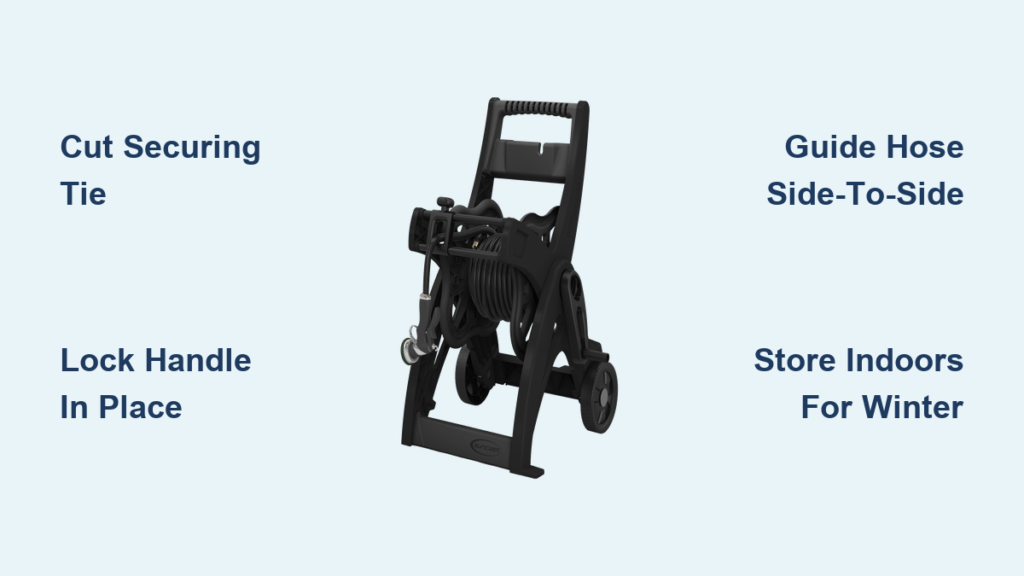
Install a Covered Wall-Mounted Hose Reel
A wall-mounted hose reel keeps your hose off the ground, prevents kinks, and hides it neatly against your home. It’s ideal for small yards, patios, or homes with limited storage.
Select a Reel with UV-Protective Cover
Choose a spring-return reel with a full plastic or metal cover. The cover shields the hose from sun, rain, and dirt. Opt for rust-proof materials like powder-coated steel or UV-stabilized resin to ensure durability.
Mount at Waist Height for Comfort
Install the reel 3 to 4 feet off the ground for easy winding and access. Use a stud finder to anchor it into wall framing—never just drywall. Position it close to your water spigot to avoid extension hoses and leaks.
Wind the Hose Slowly and Evenly
After watering, rewind the hose in smooth, consistent loops. Don’t yank or over-tighten, as this strains the internal spring. A properly wound hose stays hidden under the cover and avoids tangles next time you use it.
Store Pocket Hoses in Discreet, Compact Holders
Pocket hoses are lightweight and expandable, perfect for balconies or small yards. But without proper storage, they can still become a tangled mess.
Use a Wall-Mounted Pocket Organizer
Hang a fabric or metal garden tool organizer on a fence or wall. Slide the coiled pocket hose into a pocket designed for rakes or trowels. This keeps it dry, visible, and out of foot traffic.
Secure with Soft Velcro Ties
After coiling, fasten the hose with fabric or Velcro straps. Avoid twisting or using tight elastics, which can weaken the inner tubing. Gentle ties preserve flexibility and prevent permanent creases.
Slide Into a Decorative Storage Bag
Use a weather-resistant canvas or woven tote labeled for garden tools. Store the coiled hose inside and tuck it behind planters, under benches, or in a shed. This portable option works well for renters or seasonal use.
Use the Figure-Eight Coiling Method to Prevent Tangles
Proper coiling is essential for any storage method. The figure-eight technique cancels out twists, reduces kinks, and makes your hose easier to hide and use.
Start Coiling from the Nozzle End
Hold the spray nozzle in one hand and begin forming loops by crossing the hose over itself in a figure-eight motion. This balances rotational tension and prevents the hose from twisting when unrolled.
Keep Loops Uniform and Loose
Aim for 18 to 24 inches per loop—large enough to handle easily, small enough to store. Don’t pull too tight; gentle tension preserves the hose’s inner layers and prevents bulges.
Fasten with a Fabric or Bungee Tie
Secure the coil with a soft strap, hook-and-loop fastener, or bungee cord. Avoid wire or rubber bands, which can cut into the hose and cause leaks over time.
Shield Your Hose from Sun and Heat Damage
Even when hidden, UV rays and high temperatures degrade rubber and vinyl hoses. Prolonged exposure leads to brittleness, cracks, and burst hoses.
Never Store Hose in Direct Sunlight
Avoid leaving your hose on concrete, asphalt, or bare ground during peak sun hours. Always retract it into a shaded box, reel, or covered area after use.
Wrap with a UV-Blocking Hose Cover
If your reel lacks a cover, use a breathable fabric sleeve or insulated garden hose jacket. These reduce heat buildup and block harmful UV rays without trapping moisture.
Drain Water and Disconnect from Spigot
Turn off the water and drain the hose completely after each use. Standing water heats up in the sun, increasing internal pressure and accelerating material breakdown.
Eliminate Tripping Hazards with Smart Hose Routing
An exposed hose across a walkway is a safety risk. Proper storage and routing prevent accidents, especially in homes with kids or pets.
Run Hose Along Garden Edges or Fences
When in use, guide the hose along borders, behind shrubs, or along fence lines. Avoid crossing patios or pathways unless necessary.
Use Low-Profile Hose Guides
Install plastic hose ramps or ground clips to gently lift the hose over flower beds or stepping stones. These protect both the hose and your landscaping.
Reel It Up Immediately After Watering
Make it a habit to store the hose within minutes of finishing. A 2-minute rewind prevents trips, keeps your yard tidy, and protects the hose from damage.
Maintain Your Hose for Long-Term Use
Regular maintenance ensures your hose stays flexible, leak-free, and easy to hide. A clean, well-cared-for hose lasts years longer and performs better.
Drain All Water Before Coiling
Hold the hose at a downward angle and let it drain completely. Residual water adds weight, promotes mildew, and freezes in cold weather—causing cracks.
Check for Leaks and Weak Spots Monthly
Inspect the entire length for bulges, soft areas, or small leaks. Repair punctures with a hose mender kit or replace damaged sections to avoid bigger issues.
Wipe Down and Dry Before Storage
Clean the exterior with a damp cloth and mild soap if dirty. Rinse well and let it air-dry in the sun for 10–15 minutes before coiling. A dry hose resists mold and stores better.
Frequently Asked Questions About Hiding Garden Hose
How can I hide a garden hose without buying anything?
You can build a DIY hose holder using a wooden board and two metal clips. Mount it on a fence or wall, then wrap and secure your hose. It’s a low-cost, effective way to hide garden hose using basic tools.
What is the best way to store a hose on a fence?
Use a wall-mounted wooden board with hose clips or install a covered hose reel. Make sure the fence is sturdy enough to support the weight and keep the hose in the shade to prevent sun damage.
Can I leave my hose in a hose box all summer?
Yes, but only if the box is in a shaded area and has proper ventilation. Direct sun heats the interior and degrades the hose. Always drain the hose before storing to prevent mold and pressure buildup.
How do I prevent my hose from kinking when stored?
Use the figure-eight coiling method and avoid sharp bends. Store on a reel or wide-diameter holder, and never twist the hose when wrapping. This maintains flexibility and prevents weak spots.
What should I do with a pocket hose when not in use?
Coil it gently and store in a wall pocket, decorative bag, or under outdoor furniture. Keep it dry and out of direct sunlight to extend its lifespan and prevent tangles.
Is it bad to leave water in a garden hose?
Yes. Standing water promotes mildew, adds weight, and can freeze in cold weather—causing cracks. Always disconnect and drain your hose after each use to protect it.
Key Takeaways for How to Hide Garden Hose
Hiding your garden hose doesn’t require expensive gear—just smart organization and a few simple tools. You can build a custom wooden holder, use a decorative box, or install a covered reel to keep your yard clean and safe. The figure-eight coiling method prevents tangles, while proper drainage and sun protection extend your hose’s life. Always store your hose off the ground, out of direct sunlight, and away from foot traffic to avoid damage and tripping hazards. Try the DIY board method for a personalized touch, or invest in a reel for hands-free convenience. With these tips, you’re just minutes away from a clutter-free, hazard-free garden.