Is your garden struggling despite regular watering and feeding? The problem might not be your plants—it could be your soil. Poor structure, low nutrients, and lack of organic matter silently undermine even the most dedicated gardener’s efforts. The solution lies beneath the surface: improving garden soil naturally with time-tested, chemical-free methods that work with nature, not against it. Healthy soil isn’t just dirt—it’s a living ecosystem that feeds your plants, holds moisture, and resists pests.
You don’t need synthetic fertilizers or expensive soil replacements. By adding compost, using cover crops, mulching wisely, and protecting soil structure, you can transform compacted clay or fast-draining sand into fertile, life-rich ground. This guide delivers practical, science-backed steps to build better soil—no matter your garden type or climate. You’ll learn how to test your soil, choose the right organic amendments, avoid common mistakes, and maintain long-term health using methods that feed both plants and the microbes that support them.
Diagnose Your Soil Type and Structure
Before adding anything, identify what you’re working with. Sandy, clay, and loam soils behave differently and require tailored approaches. The first step is simple testing you can do at home.
Perform the Jar Test to Determine Soil Composition
Use this easy method to see your soil’s makeup:
1. Collect dry soil from multiple spots in your garden
2. Fill a clear quart jar one-third full with soil
3. Add water until nearly full
4. Shake vigorously for 5 minutes
5. Let sit undisturbed for 24 hours
What the layers mean:
– Bottom layer (sand): Large particles, drains quickly
– Middle layer (silt): Smooth, holds some moisture
– Top layer (clay): Fine particles, sticky when wet
– Floating bits (organic matter): Dark flecks or film
If sand dominates, you have sandy soil—great drainage but poor nutrient retention. Thick, sticky clay indicates heavy clay soil, which holds water but restricts root growth. A balanced mix? You’ve got loam, the ideal garden soil.
Use the Squeeze Test to Check Soil Health
Grab a handful of moist soil and squeeze:
– Crumbles easily: Too sandy or low in organic matter
– Holds shape but breaks apart when poked: Perfect tilth
– Stays solid like a rock: Compacted clay
– Falls apart immediately: Lacks binding structure
Healthy soil should feel crumbly, dark, and earthy—not slimy or sour-smelling. Repeat this test seasonally to track improvements.
Add Compost to Boost Fertility and Structure

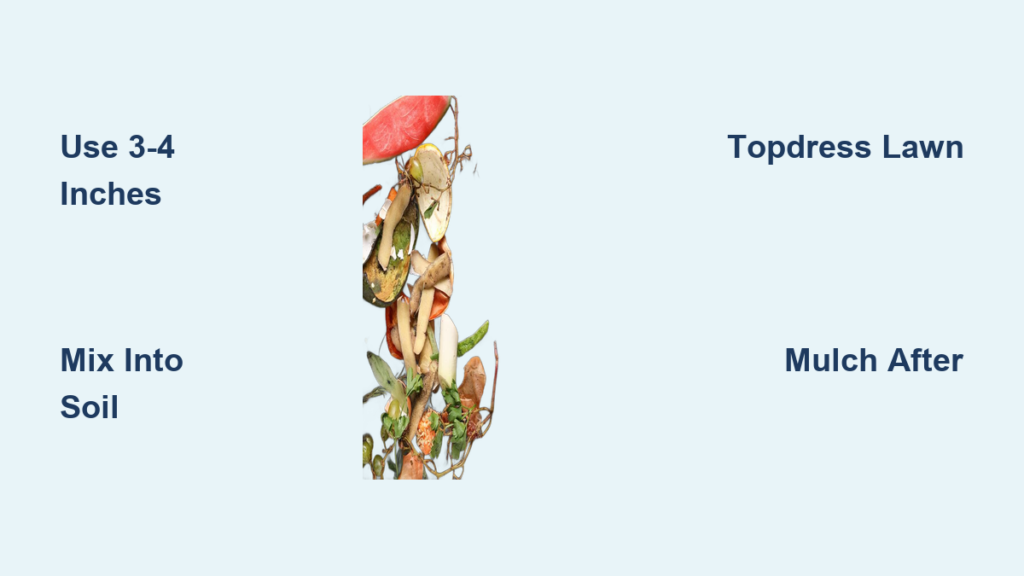
Compost is the most effective natural soil amendment. It improves water retention in sandy soils and loosens clay, all while feeding beneficial microbes.
Choose High-Quality Compost
Look for material that:
– Is dark, crumbly, and earthy-smelling
– Has no ammonia or rotten egg odor
– Is screened to remove large debris
– Comes from reliable sources like yard trimmings, leaves, or composted manure
Avoid fresh manure in vegetable gardens—use only fully composted manure to prevent pathogens like E. coli.
Apply Compost the Right Way
For in-ground beds:
– Spread 1–2 inches over the surface
– Gently mix into the top 6 inches—or leave on top for no-till gardening
For raised beds and containers:
– Blend 20–30% compost by volume into the growing mix
Use this table to estimate how much you’ll need:
| Depth | 100 sq ft | 500 sq ft | 1,000 sq ft |
|---|---|---|---|
| 1″ | 0.3 yd³ | 1.5 yd³ | 3.1 yd³ |
| 2″ | 0.6 yd³ | 3.1 yd³ | 6.2 yd³ |
Reapply compost every spring and fall to maintain organic matter levels.
Fix Sandy Soil with Organic Matter
Sandy soil drains too fast and can’t hold nutrients. The fix? Add materials that bind particles and retain moisture.
Best Natural Amendments for Sandy Soil
- Compost: Improves water and nutrient retention
- Leaf mold: Holds moisture and adds potassium
- Well-rotted manure: Supplies slow-release nutrients
- Coconut coir: Sustainable alternative to peat moss
Maintain Soil Quality Year-Round
Organic matter breaks down quickly in sandy soils, so replenish annually. Mulch beds with 1–2 inches of leaves or straw in spring and fall to protect the surface and feed microbes.
Avoid over-relying on sand to fix clay—this creates a concrete-like mix. Focus on organic matter for lasting improvement.
Improve Clay Soil Without Ruining It
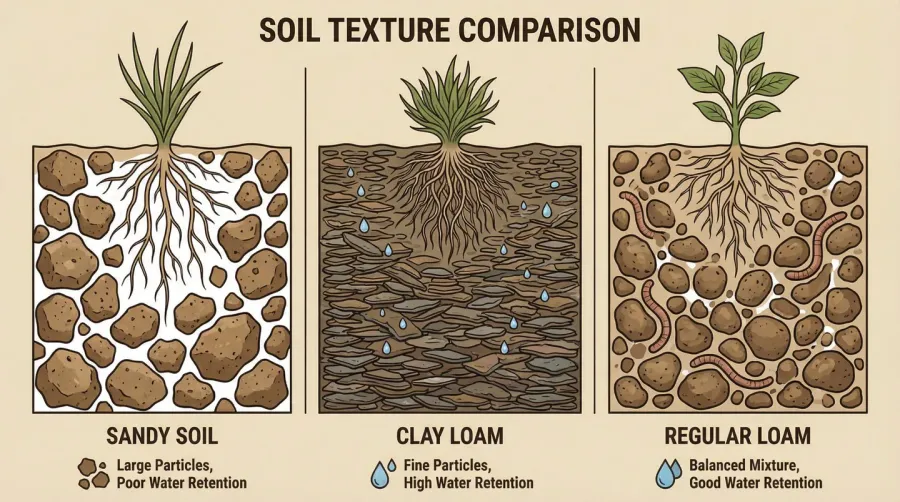
Clay holds nutrients but drains poorly and compacts easily. The goal is to increase pore space and aeration—without damaging structure.
Why Gypsum Often Fails
Gypsum (calcium sulfate) is widely recommended but rarely effective in typical garden soils. It only helps in sodic soils—those high in sodium. Most clay soils don’t need it. Skip the guesswork—test your soil before applying.
Never Mix Sand into Clay
Adding sand to clay creates a cement-like texture worse than either alone. Flat clay particles coat sand grains, sealing pores and reducing drainage. This myth leads to long-term gardening problems.
Natural Ways to Loosen Heavy Clay
- Add compost: Improves aggregation and aeration
- Plant cover crops: Deep roots like daikon radish break up compaction
- Mulch regularly: Wood chips or leaves reduce surface crusting
- Avoid walking on beds: Prevents compaction
Over time, earthworms and microbes will integrate organic matter deeper, creating stable pore spaces.
Use Cover Crops to Build Soil Over Time
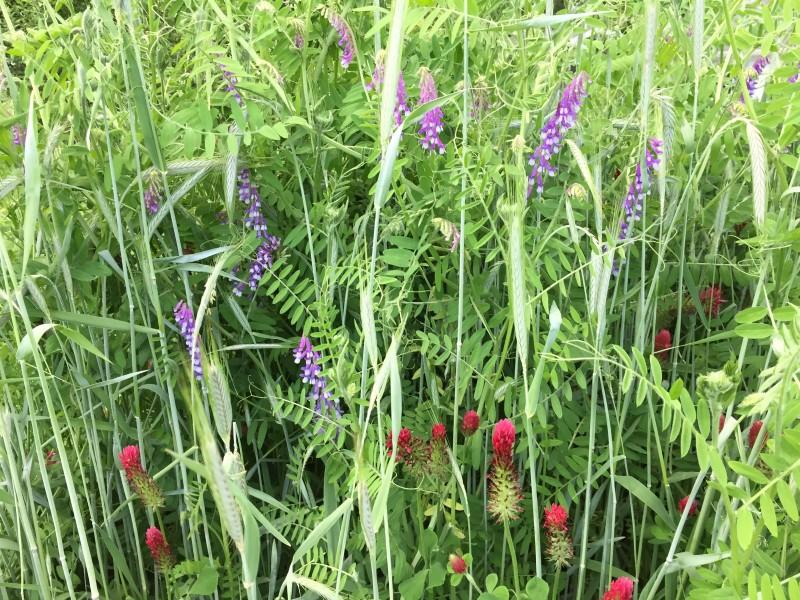
Cover crops are nature’s soil builders. They protect bare soil, suppress weeds, and add organic matter when turned in.
Best Cover Crops by Season
Fall/Winter:
– Crimson clover: Fixes nitrogen, easy to dig in
– Winter rye: Deep roots prevent erosion
– Hairy vetch: Excellent nitrogen fixer
Summer:
– Buckwheat: Fast-growing, smothers weeds
– Sudangrass: Breaks up compaction
– Cowpeas: Heat-tolerant nitrogen fixer
How to Plant and Turn In Cover Crops
- Sow seeds after harvesting summer crops or before winter dormancy
- Let grow until flowering stage
- Cut down and dig in at least two weeks before planting your next crop
- Or chop and leave as surface mulch (no-till method)
Root mats from cover crops improve soil structure more than the top growth.
Mulch to Conserve Moisture and Feed Microbes

Mulching is one of the easiest ways to improve soil naturally. It conserves water, suppresses weeds, and feeds soil life as it breaks down.
Top Organic Mulches for Garden Beds
- Shredded leaves: Free, abundant, improves structure
- Wood chips: Long-lasting, ideal for shrubs and trees
- Straw: Lightweight, good for vegetable beds
- Grass clippings: High in nitrogen—use thin layers to avoid matting
Apply Mulch Correctly
- Vegetable gardens: 1–2 inches after soil warms in spring
- Around trees and shrubs: 2–4 inches, keeping mulch away from trunks
- Perennial beds: 2 inches in spring or fall
Never pile mulch against plant stems—it can cause rot and attract pests.
Test and Track Soil Improvements
Guessing won’t build great soil. Use simple tests to monitor progress and avoid setbacks.
Recheck Soil Structure with the Squeeze Test
Test your soil:
– After rain or irrigation
– Before planting
– After adding amendments
Aim for soil that holds together loosely but crumbles when poked.
Understand a Soil Test Report
Send samples to a lab for pH and nutrient analysis. Key values:
– pH: Ideal range is 6.0–7.0 for most plants
– Organic matter: Aim for 5% or higher
– C:N ratio: Below 25:1 to avoid nitrogen tie-up
– Soluble salts (EC): Below 4 mmhos/cm to prevent plant injury
Ask for an agronomic interpretation—it tells you exactly what to do.
Avoid Common Soil Mistakes

Even well-meaning gardeners harm soil over time. Steer clear of these errors.
Don’t Till Wet Soil
Tilling or digging when soil is wet destroys structure and causes compaction. Wait until it’s crumbly, not sticky.
Skip Fresh Manure in Vegetable Gardens
Fresh manure can contain E. coli and other pathogens. Always use composted manure—it’s safer and less likely to burn plants.
Never Compost Diseased Plants
Home compost piles rarely reach temperatures high enough to kill fungi, bacteria, or viruses. Composting infected material spreads disease.
Avoid High-Salt Amendments
Chicken manure compost, steer manure, and mushroom compost often have high salt levels. Use sparingly, especially in containers or raised beds.
Maintain Soil Health for the Long Term
Great soil isn’t built in a season. It’s a continuous process of feeding, protecting, and observing.
Replenish Organic Matter Annually
Soil organic matter declines over time. Rebuild it by:
– Adding compost in spring and fall
– Rotating crops
– Using cover crops in off-seasons
Even lawns benefit—top-dress with 1/4 inch of compost annually to boost root growth.
Protect Soil Structure
- Use digging forks, not rototillers, to minimize damage
- Create permanent beds to avoid compaction
- Let earthworms and microbes do the mixing—no need to till deeply
Let Nature Take the Lead
Healthy soil is alive. Fungi, bacteria, and insects work 24/7 to:
– Break down organic matter
– Release nutrients
– Form stable aggregates
Your job? Feed them with organic matter and leave them undisturbed.
Frequently Asked Questions About Improving Garden Soil Naturally
Can I improve garden soil without compost?
Yes, but compost is the most effective option. Alternatives include mulched leaves, cover crops, and well-rotted manure. These take longer but still build organic matter and improve structure over time.
How much compost should I add to my garden?
Apply 1–2 inches of compost over the surface and mix into the top 6 inches of soil. For raised beds, blend 20–30% compost by volume into the growing medium. Reapply twice yearly for best results.
Is it safe to use manure in vegetable gardens?
Only fully composted manure is safe. Fresh manure can contain harmful pathogens like E. coli. Composting reduces ammonia, pathogens, and odor, making it safe for food crops.
Can I fix clay soil with sand?
No. Mixing sand into clay creates a cement-like mixture that’s harder to work than either soil alone. Instead, improve clay with compost, cover crops, and mulch for lasting results.
How long does it take to improve garden soil naturally?
Noticeable improvements take one growing season, but full transformation may take 2–3 years. Consistent additions of organic matter, minimal disturbance, and cover cropping accelerate the process.
Should I till compost into the soil?
Tilling is optional. You can mix compost into the top 6 inches or leave it on the surface. Earthworms and microbes will incorporate it naturally over time, preserving soil structure.
Key Takeaways for Building Healthy Garden Soil Naturally
Improving garden soil naturally starts with understanding your soil type and ends with consistent care. Compost is your most powerful tool—it enhances texture, feeds microbes, and boosts fertility in both sandy and clay soils. Pair it with cover crops, mulch, and no-till practices to build a living soil ecosystem.
Avoid common pitfalls like tilling wet soil, using fresh manure, or adding sand to clay. Test your soil regularly and replenish organic matter at least twice a year. Over time, you’ll grow stronger plants, conserve water, and reduce reliance on fertilizers—all while nurturing a thriving underground world.
Start small: add a layer of compost this season, mulch your beds, and plant a cover crop. Let nature do the rest.