You wake up to find your prized rose bush looking like lace—its leaves stripped down to fragile skeletons. A closer look reveals shiny, metallic green beetles crawling across the stems. These are Japanese beetles, one of the most destructive garden pests in North America. Left unchecked, a few beetles can summon hundreds through pheromone signals, turning lush plants into damaged ruins in days. Worse, each female lays eggs in your lawn, setting the stage for next year’s invasion. The good news? You can stop them. By acting fast and using the right mix of traps, organic removal, and soil treatments, you can kill beetles in the garden and break their life cycle for lasting control.
This guide gives you a battle-tested plan based on real-world results. You’ll learn how to deploy pheromone traps without attracting more beetles, drown adults with soapy water, use Sevin safely on fruit trees, and eliminate grubs with natural soil treatments. Whether you’re dealing with a few stragglers or a full swarm, these methods—timed correctly and used together—will protect your plants and reduce beetle numbers year after year.
Stop Beetles Fast: Act Now
Why Immediate Action Matters
Japanese beetles don’t work alone—they call for reinforcements. When one finds a host plant, it releases pheromones that attract others. This aggregation behavior turns a single beetle into a feeding swarm within days. Each female lays eggs in the soil, starting a cycle that brings back grubs and adults next season. Ignoring early signs leads to exponential population growth. The key is to act fast at the first sighting. Early intervention stops mating, reduces egg-laying, and prevents next year’s infestation.
Spot the Signs Early
Check plants weekly during peak season (late June to August). Look for:
– Skeletonized leaves – only veins remain
– Clusters of metallic green beetles with bronze wing covers
– Damage on soft tissues: leaves, flowers, fruits
Roses, hibiscus, apple trees, and berry bushes are top targets. If you see even one beetle, assume others are coming. Start control immediately.
Use Pheromone Traps Effectively
How Traps Break the Reproductive Cycle
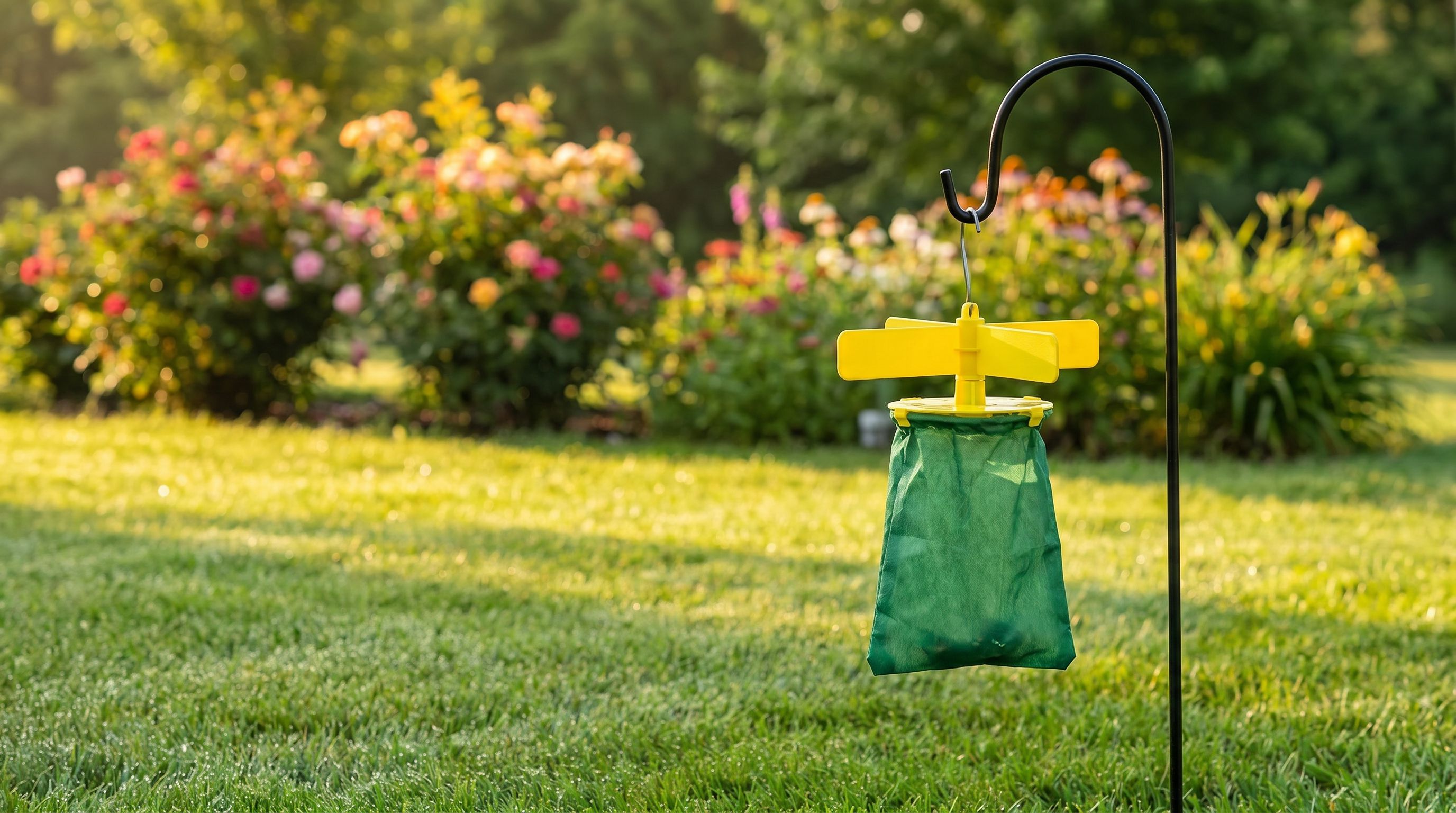
Pheromone traps use synthetic scents that mimic male beetle pheromones, luring adults into a funnel trap. Their real power isn’t just killing beetles—it’s stopping reproduction. By removing mating adults, you reduce the number of eggs laid in the soil. Fewer eggs mean fewer grubs next spring and fewer beetles the following summer. In documented cases, aggressive trap use led to a dramatic drop in beetle numbers the next year.
Place Traps Strategically
Trap placement is critical. Put them 20–30 feet away from valuable plants like roses, fruit trees, and shrubs. If placed too close, traps can attract more beetles to your garden than they catch. For best results, use 6 to 8 traps spaced around the perimeter. This creates a buffer zone that pulls beetles away from your plants.
Empty Traps Daily
Traps fill up fast—up to three full traps per day during heavy infestations. Empty them daily by opening the bottom flap and dumping beetles into soapy water or a sealed bag. Do not leave dead beetles in the trap—they emit a foul odor that can repel new beetles. If you have chickens, feed them the beetles—but only if harvested daily.
Run Traps All Season
Keep traps active from June through August, the full adult beetle season. Consistency matters. Even a short break allows beetles to mate and lay eggs. One trap used consistently for four weeks can fill completely—proof that continuous trapping works.
Hand-Pick Beetles with Soapy Water
Drown Beetles Organically
For small infestations or accessible plants, hand-picking with soapy water is a safe, chemical-free method. Fill a bucket with water and add a few tablespoons of dish soap. The soap breaks surface tension, so beetles can’t escape once knocked in. Shake or gently tap infested plants in the early morning when beetles are sluggish. They’ll fall into the bucket and drown.
Best for Low-Growing Plants
This method works well on roses, hibiscus, and berry bushes but is impractical for tall trees or large gardens. It’s not scalable for swarms. Use it as a supplement to traps or sprays, not as a standalone solution for heavy infestations.
Combine with Other Methods
Pair hand-picking with pheromone traps for faster results. While traps reduce overall population, hand removal knocks down immediate damage. Do both every morning for maximum impact.
Apply Sevin Insect Killer Safely

Protect Fruit Trees and Shrubs
For large infestations, Sevin Insect Killer Concentrate is one of the few chemical options proven effective against Japanese beetles. It forms a residual film on leaves and fruit that repels and kills foraging beetles. It’s especially useful on fruit trees where damage affects yield. Many pesticides claim to work—Sevin has real-world results.
Spray with the Right Equipment
Use a 4-gallon pump or backpack sprayer for even coverage. Start with a wide spray pattern for lower foliage. Switch to a stream tip for higher branches. Dilute according to the label—over-concentrating can harm plants.
Reapply After Rain
Sevin washes off in heavy rain. Reapply every 7–14 days or after storms. Always follow label instructions for safety and effectiveness. Avoid spraying during bloom to protect pollinators.
Kill Grubs with Biological Controls

Target the Larval Stage
Killing adult beetles stops current damage, but killing grubs prevents next year’s outbreak. The larval stage lasts nearly 10 months underground, feeding on grass roots and weakening lawns. Use biological controls to attack grubs before they emerge as adults.
Use Bacillus thuringiensis (Bt)
Bt is a natural bacterium that specifically kills beetle grubs. It’s eco-friendly and safe for pets, children, and beneficial insects. Apply in late summer or early fall when grubs are small and feeding near the surface. Mix with water and apply using a sprayer, then water deeply to move Bt into the soil.
Apply Beneficial Nematodes
Beneficial nematodes are microscopic worms that invade and kill grubs. They’re safe for the environment and highly effective when applied correctly. Like Bt, they work best in late summer to early fall. Apply in the evening or on cloudy days—sunlight kills nematodes. Keep soil moist for 7–10 days after application to ensure survival.
Follow the Proven Control Checklist
Core Actions for Every Gardener
• Act fast at the first sign of beetles
• Use 6–8 pheromone traps, placed 20–30 feet from prized plants
• Empty traps daily to avoid odor and maintain catch rate
• Maintain traps from June to August without interruption
• Combine with hand-picking for immediate plant protection
• Apply Bt or nematodes in late summer to kill grubs
• Use Sevin only when needed for large infestations
This integrated approach hits beetles at every stage—adults, eggs, and grubs.
Avoid Common Mistakes
Don’t Place Traps Near Plants
Putting traps next to roses or fruit trees brings more beetles into your garden. The lure draws them in, but if they land on your plants first, they’ll start feeding and mating before reaching the trap. Always place traps away from host plants.
Don’t Skip Daily Maintenance
A full trap becomes a stink bomb. Dead beetles rot quickly and emit odors that repel new beetles. If you don’t empty traps daily, their effectiveness plummets.
Don’t Ignore the Soil
Focusing only on adult beetles is a short-term fix. If you don’t treat the soil, grubs survive and emerge next summer. Break the cycle by targeting both adults and larvae.
Time Treatments Right
Seasonal Control Schedule
• Late June–August: Deploy pheromone traps, hand-pick beetles, apply Sevin if needed
• Late summer–early fall: Apply Bt or beneficial nematodes to kill grubs
• Winter–spring: Monitor for grub damage (brown patches in lawn), plan trap placement
Timing is everything. Miss the window for nematodes, and grubs grow too large to kill. Delay traps, and beetles mate and lay eggs.
Choose the Right Method for Your Situation
Small Infestation? Try Soapy Water
If you have only a few beetles on low plants, hand-picking with soapy water is enough. It’s safe, cheap, and effective for minor cases.
Large Swarm? Use Sevin + Traps
For heavy infestations, combine Sevin spray with pheromone traps. Spray protects plants immediately; traps reduce the population long-term.
Want Long-Term Prevention? Use Nematodes
If you’ve had beetles for years, beneficial nematodes or Bt are your best bet for reducing future numbers. Apply every fall for cumulative results.
Best Overall Strategy: Integrated Pest Management
The most successful gardeners use multiple methods together:
• Traps to disrupt mating
• Hand removal to protect plants
• Soil treatments to stop grubs
• Chemicals only when necessary
This layered defense stops beetles at every life stage.
Frequently Asked Questions About Killing Beetles in the Garden
What do Japanese beetles look like?
Japanese beetles have a metallic green body and bronze wing covers. They are about half an inch long with a thick exoskeleton. Their distinctive coloring makes them easy to identify on plants.
Can I kill beetles without chemicals?
Yes. Use pheromone traps, hand-picking with soapy water, and beneficial nematodes for grub control. These methods are chemical-free and safe for pets, kids, and pollinators when used correctly.
When should I treat for beetle grubs?
Apply Bt or beneficial nematodes in late summer to early fall. This is when grubs are small and near the soil surface. Treating too late reduces effectiveness.
Do pheromone traps attract more beetles?
They can—if placed too close to plants. Always place traps 20–30 feet away from roses, fruit trees, and other host plants. This pulls beetles away from your garden instead of drawing them in.
How fast do Japanese beetles multiply?
Very fast. One beetle releases pheromones that attract others. Within days, a few beetles can become a swarm. Each female lays eggs in the soil, leading to next year’s infestation if not controlled.
Will Sevin harm my bees?
Sevin can harm pollinators if sprayed on blooming plants. Avoid using it during flowering. Apply in the evening when bees are less active, and always follow label instructions to minimize risk.
Key Takeaways for Stopping Garden Beetles
Killing beetles in the garden requires speed, strategy, and consistency. Start at the first sign with pheromone traps placed 20–30 feet from plants, empty them daily, and combine with hand-picking or Sevin for immediate protection. In late summer, apply Bt or beneficial nematodes to kill grubs and prevent next year’s outbreak. By breaking the reproductive cycle, you’ll see fewer beetles each summer—until your garden is finally free. Stick to the plan, and your roses, fruit trees, and shrubs will thrive beetle-free.