Creating a Japanese garden is more than arranging rocks and plants—it’s about crafting a space for mindfulness, stillness, and connection with nature. Rooted in Zen philosophy, these gardens are designed to reflect the essence of nature in miniature: mountains become stones, flowing water turns into raked gravel, and silence becomes its loudest voice. Whether you have a sprawling yard or just a quiet corner of 2 square meters, you can build a serene retreat that demands little upkeep but delivers deep peace.
This guide walks you through how to make a Japanese garden using authentic design principles, natural materials, and low-maintenance techniques. From rock placement to bamboo water features, every step is grounded in tradition yet adaptable to modern spaces. You’ll learn not just how to build it—but how to experience it daily through raking, sitting, and simply being present.
Embrace Zen Design Principles First
Use Odd Numbers for Natural Balance
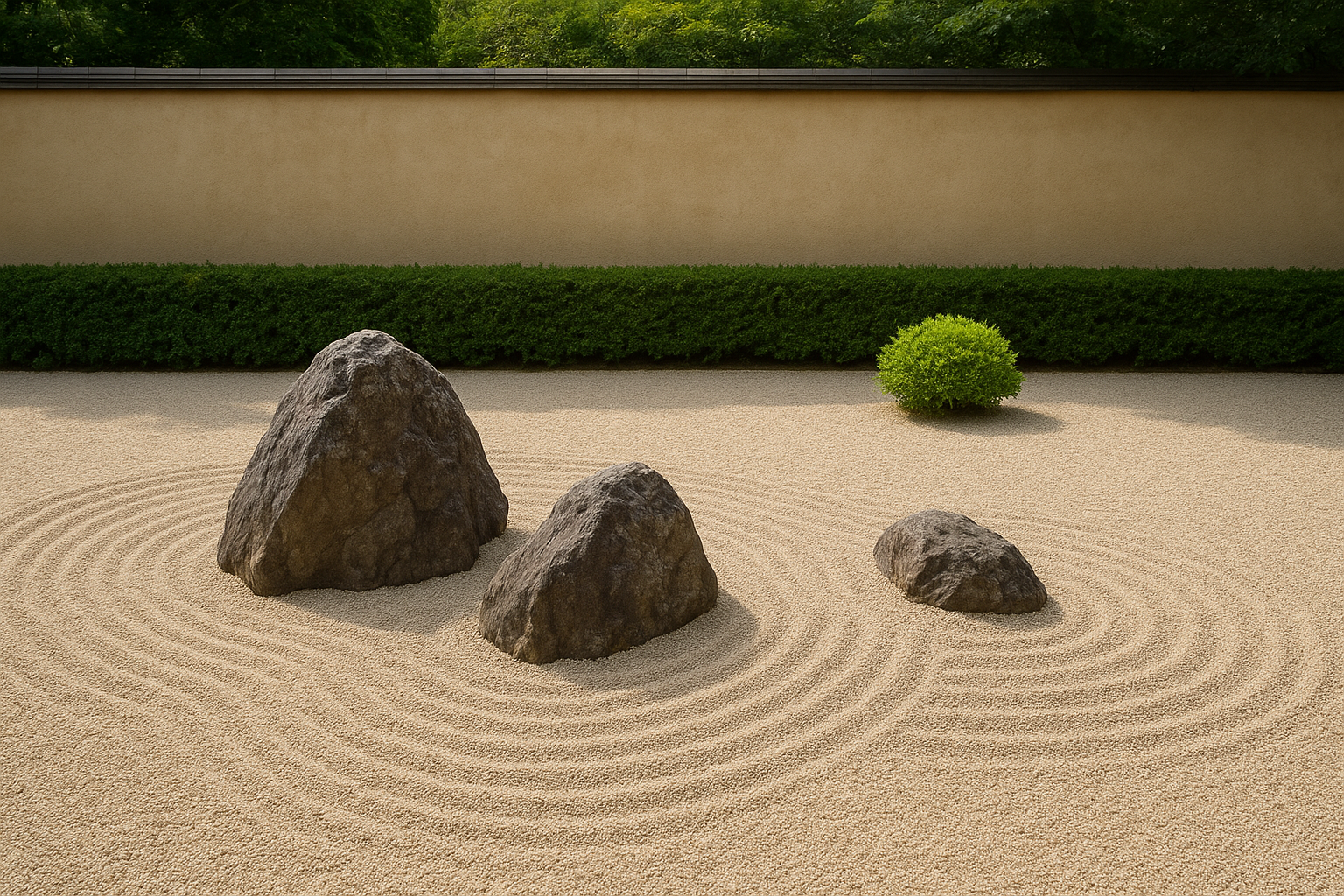
Symmetry feels artificial in nature. Japanese gardens rely on asymmetry and odd-numbered groupings—3, 5, or 7 elements—to create visual harmony that feels organic. For example, place three rocks: one large “parent” rock, a slightly smaller one behind it, and a third off to the side. This mimics mountain ranges rising from the sea and invites the eye to move naturally through the space.
Avoid even numbers like two or four—they feel staged and static. The same rule applies to plants. A trio of camellias feels intentional; a pair looks incomplete.
Let Symbolism Guide Every Choice
A Japanese garden isn’t literal—it’s symbolic. Each element stands for something greater:
– Rocks = mountains or spiritual presence
– Raked gravel = flowing water or rivers
– Empty space = stillness and openness
– Water sound = the passage of time and impermanence
When placing a rock, ask: does it feel grounded? Does the gravel flow around it like a stream? Let meaning—not decoration—dictate placement.
Prioritize Minimalism Over Clutter
Every item must earn its place. Clutter blocks ki, the flow of energy, and distracts from contemplation. Start by clearing your space of unnecessary objects. Focus on open areas that invite stillness, not visual noise. A single well-placed stone can speak louder than ten scattered ones.
Less is more. One successful garden uses only three plants: Coral Bark Maple, Camellia ‘Avalanche’, and Raphiolepis ‘Oriental Pearl’. This simplicity reduces maintenance and strengthens design cohesion.
Plan Your Layout with Intention
Choose a Quiet, Visible Location
Pick a peaceful spot visible from indoors—near a window or patio—so you can enjoy it daily. Avoid high-traffic zones. The goal is a space for sitting, not passing through. Morning light enhances red-stemmed maples and soft shadows from lanterns, so orient your garden to catch early sun if possible.
Even 2–4 square meters is enough for a full Zen experience. A small courtyard or balcony can host a miniature version with just rocks and raked gravel.
Preserve Existing Plants as Backdrops
Don’t remove established bamboo, gingers, or shrubs unless they clash with your vision. These serve as living screens that add depth without clutter. A blooming camellia in winter or nandina turning red in cold months becomes part of the garden’s seasonal rhythm.
Use trees as natural backdrops. Let them frame the scene, not dominate it.
Sketch the Design Before Building
Draw a rough plan marking where rocks, gravel, seating, and water features will go. Consider sight lines: what do you see from your favorite chair? Where does the eye rest? Avoid tight corners or blocked airflow. Leave space to move—or simply to sit and observe.
Order all materials in one delivery to save time and cost. Streamline the build by preparing everything ahead.
Prepare the Ground for Long-Term Stability
Clear and Level the Area Completely
Remove weeds, grass, and debris from the designated zone. Level the ground where gravel will go—uneven surfaces cause pebbles to shift and pool. Use a spirit level and rake to create a smooth base. This ensures clean lines and stable rock placement later.
Install Weed Mat Under All Gravel Zones
Lay a high-quality weed mat across the entire gravel area. This prevents weeds and stops soil from mixing with pebbles, keeping them bright white. Overlap seams by at least 10cm and secure edges with landscape pins. This single step slashes long-term maintenance and preserves visual purity.
Place Rocks Like Mountains Rising from the Sea

Follow the Three-Rock Rule for Depth
Start with the largest rock as your focal point—the “parent” mountain. Place a slightly smaller one behind it, and a third to the side. This trio creates depth and movement, mimicking natural landforms. Use volcanic rock or concrete stones with random shapes and natural gray tones—they blend seamlessly with limestone and surrounding plants.
Bury One-Third of Each Rock for a Rooted Look
Sink each rock about one-third into the ground. This makes them appear grown, not placed. Angle them slightly forward so they lean toward the viewer, enhancing presence. Rotate rocks until they feel balanced but not identical—perfect symmetry breaks the illusion of nature.
Leave Space Between Rocks for Energy Flow
Don’t crowd stones together. Allow open space between them so air and light can move freely. This respects the flow of ki. Think of rocks as islands in a sea of gravel—each distinct, yet part of a larger landscape.
Install White Gravel as Flowing Water
Spread Gravel to 50mm Depth for Clean Lines
Use fine white pebbles or gravel over the weed mat at a minimum depth of 50mm (2 inches). This thickness prevents weeds from pushing through and gives a plush, uniform look. White reflects light, enhancing brightness and purity—key to the garden’s calming effect.
Rake Into Meditative Patterns Daily
Use a traditional rake or a DIY version (a flat board with evenly spaced nails) to create straight, parallel lines. These represent ripples in water. For circular patterns, rake around rocks to suggest waves radiating from islands. Raking isn’t just upkeep—it’s a daily ritual that clears the mind as much as the garden.
Refresh Patterns Weekly or After Rain
Wind, rain, and footprints disturb the gravel. Rake it weekly or whenever it feels “off.” If pebbles scatter, consider low edging—like slate or timber—to contain them. Keep a dedicated rake nearby for ease.
Build Simple, Natural Seating
Turn Retaining Walls Into Instant Benches
If you have a retaining wall, use it as a seat base. Place one large rock as a support, then rest a pre-cut half-sleeper (H4-treated pine) across it. No carpentry needed. This blends function with nature—durable, low-profile, and ready in minutes.
Create Rock-Supported Benches in Open Areas
No wall? Use two sturdy rocks as supports. Lay the half-sleeper across them. Ensure the seat is level and stable. Position it to face the garden’s focal point—perhaps the rock trio or water feature. Add a cushion for comfort, but keep it simple.
Design Wide Steps as Multi-Use Seating
In multi-level decks, make the top step wide—60cm or more. It doubles as a perch for morning tea or evening reflection. Use H4-rated treated pine for ground contact durability. Space fixings every 450mm to prevent sagging, especially on diagonal decking.
Add a Bamboo Water Feature for Rhythm and Sound
Build a Shishi-Odoshi (Deer Scarer) Fountain
This traditional bamboo device creates a rhythmic thud as it tips. Cut a bamboo section with a hole drilled just behind a node—this seals it watertight. Attach thin bamboo legs with holes to form a pivot. As water fills the tube, it tips, dumps, and resets. The sound mimics nature and deters wildlife like possums.
Install Spout and Hidden Reservoir
Use a large bamboo pole with internal nodes removed by drilling. Thread a pipe through it, attach a flow valve, and position the spout so water lands precisely in the catcher. Place a low-voltage pump (~$20) in a dug hole reservoir. Hide tubing and pump under lava rock for a seamless look.
Choose Continuous Flow for Gentle Ambiance
Prefer soothing sound over rhythm? Run water through a stone channel into a hidden reservoir. The soft trickle calms without interruption. Either way, the water feature is the garden’s heart—its sound deepens the meditative quality.
Frame the Space with Gates and Screening
Construct a Sturdy Double Gate System
Use pre-cut timber frames with cross-bracing to prevent twisting. Install gate hinges for smooth operation. Design gates to open inward—this avoids hitting trees or structures. The frame should feel solid, not flimsy.
Attach Bamboo Screening for Privacy and Texture
Lattice bamboo panels add authenticity and filter light. They create dappled shadows and reduce wind exposure. Secure panels to the frame with galvanized screws. For a handmade touch, add a bamboo handle tied with sisal rope—simple, elegant, and tactile.
Maintain Openness Within the Enclosure
Screening should define space without closing it off. Leave gaps at the top or sides for airflow. The goal is a sense of arrival—not isolation. When you open the gate, the garden should unfold gradually, inviting slow entry.
Choose Low-Maintenance, Seasonal Plants

Select for Texture and Form, Not Just Color
Prioritize foliage, shape, and seasonal change. Coral Bark Maple (Acer palmatum) offers red stems that glow in winter sun. Camellia sasanqua provides delicate white blooms in shade. Black Mondo Grass replaces lawn with dark, wiry texture that contrasts white gravel.
Stick to Three Key Species for Cohesion
One proven garden uses only:
– Coral Bark Maple – focal point with winter interest
– Camellia ‘Avalanche’ – slimline, shade-tolerant, long bloom
– Raphiolepis ‘Oriental Pearl’ – drought-resistant, cloud-like shape
This simplicity reduces care and strengthens design unity.
Use Ground Covers to Block Weeds Naturally
Scleranthus and Ophiopogon form dense mats that suppress weeds and mimic forest floor. They require no mowing, edging, or pruning. Once established, they thrive with minimal watering—ideal for dry climates.
Light the Garden for Evening Calm
Place Lanterns to Cast Soft Shadows
Position solar or low-voltage lanterns near rocks, plants, or water. They highlight textures without glare. Avoid bright, overhead lighting—it disrupts the garden’s tranquility. Let shadows play across gravel and stone.
Highlight Focal Points After Dark
Aim light at the rock trio, water feature, or coral bark maple. This draws the eye and extends usability into evening. The interplay of light and shadow enhances depth, making the garden feel larger.
Create a Nighttime Sensory Experience
Combine soft lighting with water sounds and rustling leaves. The garden becomes a sanctuary after dark—perfect for quiet reflection. You don’t need much: one lantern, one water sound, one seat.
Maintain With Just Minutes a Week
Rake Gravel Weekly for Mindfulness and Cleanliness
This is the core maintenance task—and the most rewarding. Raking clears debris, refreshes patterns, and centers the mind. Keep a dedicated rake nearby. If using a DIY version, ensure teeth are evenly spaced for clean lines.
Clean Water Feature Monthly
Check the pump and reservoir every few weeks, especially in hot weather. Algae and debris can clog the system. Adjust the flow valve to maintain desired sound—too loud disrupts peace; too soft loses effect.
Inspect Bamboo and Timber Annually
Bamboo may need replacement every few years depending on climate. Check decking for warping or loose fixings. H4-treated pine lasts longer in wet conditions but still benefits from occasional inspection.
Adapt to Small or Challenging Spaces
Scale Down for Tiny Yards or Balconies
A 2m x 2m space is enough. Use smaller rocks, narrow gravel paths, and compact plants like Nandina domestica or dwarf loropetalum. A miniature Zen garden with just rocks and raked gravel can sit in a courtyard or balcony.
Work Around Trees, Walls, and Slopes
Let existing trees become backdrops. Use a slope for tiered rock placement. Incorporate walls into seating or screening. Adapt, don’t fight, the space. A garden that feels grown, not imposed, is more authentic.
Choose Climate-Appropriate Materials
In humid areas, H4-treated pine resists rot. In dry climates, drought-resistant plants like Raphiolepis thrive. Select bamboo species suited to your region—some degrade faster in wet conditions.
Avoid Common Japanese Garden Mistakes
Never Use Even Numbers of Elements
Two rocks feel static. Four feel staged. Always use odd numbers—3, 5, 7—for natural balance. This applies to plant groupings too. A trio of camellias feels intentional; a pair feels incomplete.
Avoid Synthetic Materials at All Costs
No plastic edging, artificial turf, or painted metal. Stick to wood, stone, bamboo, and gravel. These age gracefully, developing patina over time—true to wabi-sabi, the beauty of imperfection.
Prevent Cluttered Layouts
Every element must serve a purpose. If it doesn’t enhance stillness, remove it. A garden with too many lanterns, statues, or plants loses its Zen essence. Less is more.
Frequently Asked Questions About How to Make a Japanese Garden
What is the most important principle in a Japanese garden?
The most important principle is minimalism guided by symbolism. Every rock, plant, and space must have meaning. The garden is not for show—it’s for experience. Embrace wabi-sabi (beauty of imperfection), use odd numbers, and allow energy (ki) to flow freely.
Can I make a Japanese garden in a small space?
Yes. A Japanese garden can thrive in just 2–4 square meters. Use scaled-down elements: smaller rocks, compact plants like Nandina, and a simple gravel-and-rock design. Even a balcony can host a tabletop version.
What plants are best for a low-maintenance Japanese garden?
Top choices include:
– Coral Bark Maple – red winter stems
– Camellia sasanqua – shade-tolerant, winter blooms
– Black Mondo Grass – dark ground cover
– Raphiolepis ‘Oriental Pearl’ – drought-resistant, cloud-like shape
– Scleranthus – weed-suppressing mat
All require minimal pruning, watering, or care.
How do I keep weeds out of my gravel?
Install a high-quality weed mat under the gravel. Overlap seams by 10cm and secure edges. This blocks weeds and prevents soil from mixing with pebbles. Combine with dense ground covers like Ophiopogon for double protection.
Do I need a water feature?
Not required, but highly recommended. Water adds sound and movement, deepening the meditative quality. A simple bamboo shishi-odoshi or hidden trickle system costs under $50 and transforms the space.
How often should I rake the gravel?
Rake weekly or whenever the pattern looks disturbed by rain or wind. Raking is both maintenance and mindfulness practice. It keeps the garden looking fresh and gives you a daily moment of presence.
Key Takeaways for Creating Your Japanese Garden
Building a Japanese garden is not about perfection—it’s about presence. Start small: place one rock, rake one line, sit and observe. Let the space evolve with you. Use natural materials, follow Zen principles, and prioritize stillness over spectacle.
You don’t need a large yard or expert skills. With volcanic rock, white gravel, a few resilient plants, and a bamboo water feature, you can create a sanctuary that calms the mind and connects you to nature daily. The best gardens aren’t built—they’re felt. Begin today, and let your garden grow with intention, peace, and quiet beauty.