You’ve just harvested fresh broccoli from your garden, and now you’re faced with a common challenge: how to keep it crisp, green, and nutritious for as long as possible. Garden-fresh broccoli is at its peak flavor and texture right after harvest, but without proper storage, it can turn yellow, become limp, or develop off-flavors in just a few days. The good news is that with the right techniques, you can extend its shelf life significantly—whether you plan to use it in the next week or save it for months ahead.
Storing broccoli properly starts the moment you cut it. Unlike store-bought heads that may have been sitting for days, homegrown broccoli hasn’t been pre-cooled or treated with preservatives, so timing and handling are critical. This guide walks you through every step—from harvesting at the right time to long-term freezing—so you don’t waste a single floret. You’ll learn how to maximize freshness in the fridge, when to skip the washing step, and how to prep for freezing without losing texture or nutrients.
Whether you’re dealing with a small yield or a bumper crop, these proven storage methods will help you enjoy your garden’s bounty all season long.
Harvest Broccoli at the Right Time
Pick in the Early Morning for Maximum Crispness
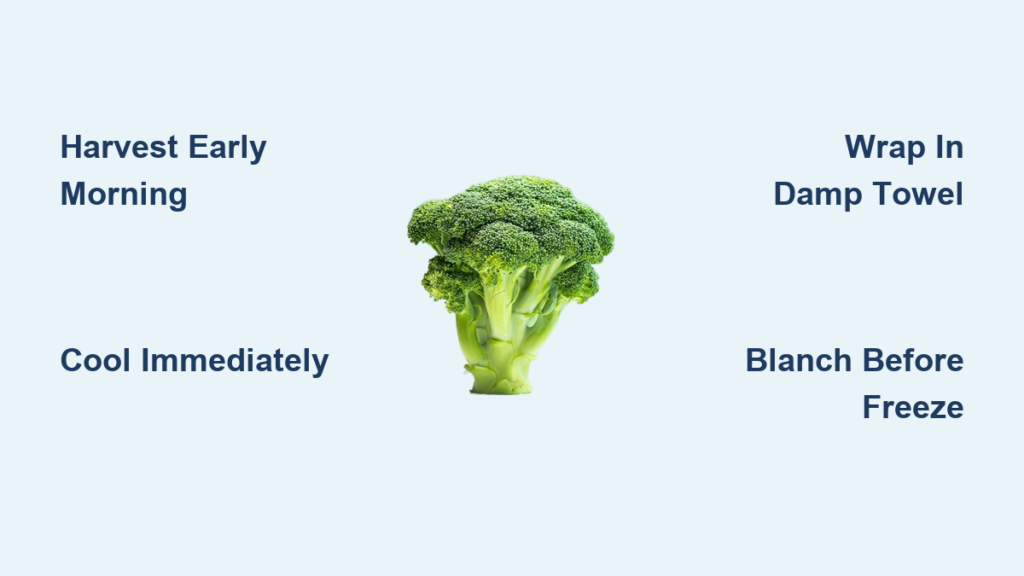
Harvest your broccoli in the cool hours of early morning when the plant is most hydrated. Cooler temperatures help preserve firmness and delay wilting. Use a sharp knife to cut the main head at an angle, leaving 5–6 inches of stem. This angled cut prevents water from collecting on the stump, which reduces the risk of rot and supports healthy side shoot development.
Look for Compact, Dark Green Heads
Choose heads that are 4–7 inches wide with tightly closed buds. Avoid waiting too long—once the florets start to separate or show yellow flowers, the broccoli is bolting and will taste bitter. Harvesting promptly also encourages the plant to produce side shoots for additional harvests later in the season.
Cool Broccoli Immediately After Cutting
Use Cold Water to Remove Field Heat
Broccoli loses quality quickly when left in warm conditions. Within 30 minutes of harvest, cool it down by submerging the heads in a bowl of cold water for 10–15 minutes. This process, known as hydrocooling, rapidly lowers the internal temperature and restores crispness. After soaking, drain and gently shake off excess water—never store wet broccoli.
Keep Out of the Sun During Harvest
Never leave freshly cut broccoli in direct sunlight. Heat exposure speeds up yellowing and toughens the stems. If you’re harvesting multiple plants, bring a portable cooler with ice packs to the garden. Place each head in the cooler as soon as it’s cut to maintain a consistently cool environment.
Store Unwashed Broccoli in the Fridge
Wrap in a Slightly Damp Paper Towel
Do not wash broccoli before refrigerating—it traps moisture and encourages mold. Instead, wrap the entire head loosely in a damp paper towel or clean cloth. This keeps humidity around the florets without making them soggy. Then place the wrapped broccoli in a perforated plastic bag or a breathable produce container.
Keep in the High-Humidity Crisper Drawer
Store the wrapped broccoli in the refrigerator’s high-humidity crisper drawer, set between 32–40°F (0–4°C). Keep it away from fruits like apples, bananas, and tomatoes that release ethylene gas, which causes broccoli to yellow faster. When stored correctly, unwashed broccoli stays fresh for 7–14 days.
Check for Spoilage Every Few Days
Inspect your broccoli every 2–3 days. Remove any yellowing florets or soft spots right away to prevent spoilage from spreading. If you notice condensation inside the bag, replace the damp towel and rewrap to reduce moisture buildup.
Freeze Broccoli for Long-Term Use
Blanch Before Freezing to Preserve Quality
Never freeze raw broccoli—it becomes mushy and develops off-flavors. To lock in color, texture, and nutrients, blanch it first. Bring a large pot of water to a rolling boil. Cut the broccoli into 1–1.5 inch florets and peel any thick stems. Submerge the pieces in boiling water for exactly 3 minutes (2 minutes for smaller pieces), then immediately transfer to an ice bath for 3 more minutes to stop the cooking process.
Dry Completely to Prevent Freezer Burn
After blanching, drain the florets and spread them on a clean towel. Pat dry and let air-dry for 15–20 minutes. Any leftover moisture will form ice crystals and lead to freezer burn. For best results, flash freeze by arranging the pieces in a single layer on a baking sheet and freezing for 1–2 hours before transferring to bags.
Pack in Airtight Freezer-Safe Bags
Place the frozen florets into labeled, airtight freezer bags or vacuum-sealed containers. Squeeze out as much air as possible to prevent oxidation. Properly stored, blanched broccoli will last 12–18 months at 0°F (-18°C). Always write the date on the package so you can use older batches first.
Store and Use Broccoli Stems Separately

Peel and Slice Stems for Fresh Storage
Don’t throw away the stems—they’re tender and delicious when peeled. Use a vegetable peeler to remove the tough outer layer, then slice into rounds or matchsticks. Store prepped stems in a sealed container lined with a dry or slightly damp paper towel. They’ll stay fresh in the fridge for up to 5 days.
Blanch and Freeze Stems with Florets
Peel and chop stems, then add them to the boiling water 1 minute before the florets since they take longer to cook. After blanching, freeze them using the same method as the florets. Use frozen stems in soups, stir-fries, smoothies, or blended dips like hummus.
Avoid Common Broccoli Storage Mistakes

Don’t Use Sealed Plastic Bags Without Ventilation
Storing broccoli in airtight, non-perforated plastic traps moisture and ethylene gas, speeding up decay. Always use breathable bags—like mesh produce bags—or leave the top of a plastic bag slightly open to allow airflow while maintaining humidity.
Never Leave Broccoli on the Counter
Room temperature storage leads to rapid quality loss. At 70°F (21°C), broccoli can wilt and yellow within 24–48 hours. Always refrigerate harvested broccoli unless you plan to use it the same day.
Keep Away from Ethylene-Producing Fruits
Apples, bananas, tomatoes, and avocados release ethylene gas, which accelerates aging in broccoli. Store your broccoli in a separate crisper drawer or on a different shelf to avoid exposure. If sharing a container, place broccoli on top and away from fruit.
Use the Best Containers for Freshness
Choose Breathable Mesh or Cloth Bags
Reusable mesh or cotton produce bags allow air circulation while retaining light moisture—ideal for short-term fridge storage. They prevent the damp, stagnant environment that encourages mold, unlike regular plastic grocery bags.
Use Glass or BPA-Free Containers for Pre-Cut Pieces
For chopped or prepped broccoli, use glass or BPA-free plastic containers with loose-fitting lids. Line the bottom with a dry or slightly damp paper towel to absorb excess moisture. These containers protect against odors and make it easy to spot early signs of spoilage.
Rotate and Monitor Your Stored Broccoli
Follow the First-In, First-Out Rule
When storing multiple harvests, always use the oldest broccoli first. Label containers with the harvest or storage date to keep track. This simple habit prevents forgotten produce from spoiling at the back of the fridge.
Know When to Discard Old Broccoli
Throw out broccoli if you see widespread yellow or brown spots, a slimy texture, a strong sulfur smell, or fuzzy mold. Small yellow tips can be trimmed, but extensive discoloration or odor means it’s no longer safe or enjoyable to eat.
Frequently Asked Questions About Storing Garden Broccoli
Can you store fresh broccoli without refrigeration?
No, broccoli should not be stored at room temperature for more than a few hours. At 70°F (21°C), it begins to yellow, wilt, and lose nutrients within 24–48 hours. Refrigeration is essential for preserving freshness beyond same-day use.
Should you wash broccoli before storing it?
No, do not wash broccoli before storing. Moisture encourages mold and speeds up decay. Wait to wash it until just before cooking or eating.
How long does garden broccoli last in the fridge?
When stored unwashed, wrapped in a damp towel, and placed in the high-humidity crisper drawer, fresh broccoli lasts 7–14 days. Pre-cut or washed pieces last only 3–5 days.
Why does my stored broccoli turn yellow?
Yellowing is caused by heat exposure, aging, or ethylene gas from ripening fruits. It signals the start of spoilage and a decline in flavor and texture. Harvest promptly and store in a cool, ventilated space away from fruits.
Can you freeze broccoli without blanching?
Freezing raw broccoli is not recommended. It results in dull color, mushy texture, and off-flavors due to enzyme activity. Blanching stops these enzymes and preserves quality during frozen storage.
What’s the best way to use stored broccoli stems?
Peel the tough outer layer and slice the tender inner part. Use fresh in salads or stir-fries, or blanch and freeze for soups, smoothies, or blended dishes like green hummus.
Key Takeaways for Storing Garden Broccoli
Proper storage of garden broccoli begins at harvest and depends on quick cooling, smart wrapping, and correct temperature control. Keep it unwashed and wrapped in a damp towel in the fridge for up to two weeks, or blanch and freeze for long-term use. Always avoid sealed plastic, countertop storage, and ethylene-producing fruits.
By following these steps, you’ll preserve the crisp texture, vibrant color, and nutritional value of your homegrown broccoli. Whether you’re storing a single head or a full harvest, these methods ensure nothing goes to waste—so you can enjoy your garden’s fresh taste all year round.