Weeds don’t just compete for space—they steal water, sunlight, and nutrients from your vegetables, turning a thriving garden into a constant battleground. If you’re looking for an organic way to stop weeds before they sprout, Preen Natural Vegetable Garden Weed Preventer can be a game-changer. Made from 100% corn gluten meal, this pre-emergent stops weed seeds from germinating without harming your mature plants—as long as you apply it correctly. But here’s the catch: it won’t kill existing weeds, and using it too early can block your own vegetable seeds from sprouting. Many gardeners accidentally use the older chemical version (with Treflan), which can linger in soil and damage crops. This guide shows you exactly how to use Preen in your vegetable garden—safely and effectively—so you spend less time weeding and more time harvesting.
This step-by-step plan covers product selection, timing, application, and pro tips to maximize results. You’ll learn how to avoid common mistakes, extend weed control with mulch, and even plant new seeds after applying Preen.
Choose the Right Preen for Edible Gardens

Identify Organic Corn Gluten vs. Chemical Treflan
Not all Preen is safe for vegetables. The name “Preen” once referred to a chemical herbicide containing trifluralin (Treflan), which stops seeds from sprouting and can remain in soil for months. This version is unsafe for food gardens—especially for lettuce, corn, or any grass-like plants.
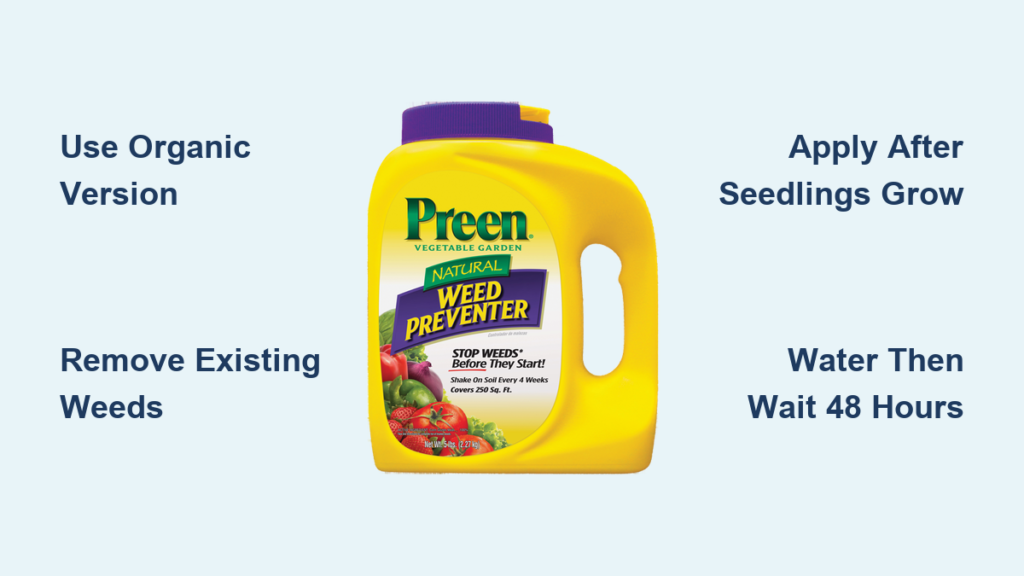
Today’s Preen Natural Vegetable Garden Weed Preventer uses 100% corn gluten meal, an organic byproduct of corn processing. It forms a temporary barrier that stops weed seeds from developing roots and breaks down naturally in 4–6 weeks. Always check the label:
– ✅ Safe for veggies: Look for “Natural,” “Organic,” and “Corn Gluten Meal”
– ❌ Avoid in food gardens: “Treflan,” “trifluralin,” or “for ornamentals only”
Confirm Packaging and Label Details
- SKU: 2464219 (for the natural version)
- Sizes: 5 lb. bottle (covers 250 sq. ft.), 25 lb. bag (availability varies)
- Price: ~$22 for 5 lbs.—about three times the cost of plain corn gluten meal
- Storage: Keep in a cool, dry place away from sunlight to maintain potency
💡 Pro Tip: Buying bulk corn gluten meal may save money, but Preen’s granules are designed for even spreading and reliable performance.
Clear Weeds and Prepare Soil Before Application
Remove All Existing Weeds First
Preen does not kill existing weeds—it only stops new ones from sprouting. Before applying, pull, dig, or hoe out every visible weed, including roots. Even small root fragments of perennial weeds like dandelion or bindweed can regrow.
⚠️ Warning: Tilling can bring buried weed seeds to the surface, where sunlight triggers germination. If you till, do it early and remove any new sprouts before applying Preen.
Rake and Smooth the Soil Surface
Clear plant debris, stones, and clumps with a garden rake. A clean, level bed ensures even coverage and proper activation when watered.
Apply Preen Using the 4-Step Method
Follow the Proven Application Sequence
For maximum effectiveness, stick to this four-step process:
1. SPRINKLE Evenly Over Soil
- Apply 5 lbs. per 250 sq. ft. (about 1–2 lbs. per 100 sq. ft.)
- Shake the bottle or spread by hand, covering all bare soil
- Focus on spaces between rows and around established plants
- Avoid piling near stems to prevent nitrogen burn (corn gluten is high in nitrogen)
🌿 Best Practice: Use a handheld spreader for larger gardens to ensure uniform coverage.
2. INTEGRATE Lightly Into Top ½ Inch
- Gently rake granules into the top ½ inch of soil or mulch
- This helps anchor the barrier and improves contact with weed seeds
- Don’t dig deep—this disturbs soil and may trigger new weed growth
3. WATER to Activate the Barrier
- Immediately water to a depth of 1–2 inches
- Moisture activates corn gluten, forming a natural layer that blocks root development in germinating weed seeds
- Use a soaker hose or gentle sprinkler to avoid washing granules away
4. DO NOT Disturb for 48–72 Hours
- After watering, do not hoe, dig, or irrigate for at least 2–3 days
- Soil disturbance breaks the protective layer and allows weeds to sprout
- Overhead watering during this period reduces effectiveness
💧 Rain Alert: Heavy rain soon after application may require reapplication.
Time Applications to Match Weed Growth Cycles
Apply Preen at the Right Time of Year
Apply Preen anytime during the growing season, even up to the day before harvest. But timing affects performance:
- Best Times:
- Early spring – before weed seeds germinate
- Late fall – to stop winter annuals
- Avoid Late Spring/Summer for New Seeds: If applied too late, corn gluten acts more like a fertilizer than a pre-emergent
Reapply Every 4–6 Weeks for Continuous Protection
- The barrier lasts 4–6 weeks, depending on weather and soil conditions
- Reapply after heavy rains or intense irrigation
- Some retailers claim 3-month control, but real-world results suggest shorter duration
📅 Schedule Example:
– April 1: First application
– May 15: Reapply after spring rains
– July 1: Third application
– September 1: Final fall application
Use Preen Safely Around Vegetables and Seedlings

Wait Until Seedlings Are 2–3 Inches Tall
Never apply Preen to newly seeded areas. It can inhibit the germination of your own vegetable seeds.
- Safe to apply when:
- Seedlings have true leaves (not just cotyledons)
- Plants are 2–3 inches tall
- Roots are well-developed
🥬 Example: For lettuce, carrots, or beets, wait until seedlings are established before applying.
Plant New Seeds After Preen With a Peat Workaround
If you need to sow seeds after using Preen, isolate them from treated soil:
Create Peat-Filled Furrows
- Make a shallow trench in the soil
- Fill it with peat moss or seed-starting mix (free of Preen)
- Sow seeds directly into the peat
- Water gently
This method keeps seeds in untreated media, allowing normal germination.
✅ Works for: Lettuce, radishes, spinach, and other direct-sown crops
Boost Weed Control by Combining Preen With Mulch

Apply Preen Under or Within Mulch Layers
Preen works even better when paired with mulch:
- Apply Preen directly on soil
- Then add 2–3 inches of organic mulch (straw, shredded leaves, wood chips)
- OR: Sprinkle Preen on top of existing mulch and lightly rake in
Benefits:
– Mulch shields the Preen layer from rain and sunlight
– Reduces soil disturbance
– Enhances moisture retention and weed suppression
🧱 Ideal for: Raised beds, in-ground gardens, and landscape borders
Know Which Weeds Preen Can and Cannot Stop
Prevents Germination of 21 Common Weeds
Preen Natural stops these weed seeds from sprouting:
- Annual bluegrass
- Bermudagrass
- Black medic
- Clover
- Crabgrass (large and smooth)
- Dandelion
- Foxtail (giant, green, yellow)
- Lambsquarters
- Purslane
- Pigweed
- And more (see full list on product label)
❗ Limitation: Does not control perennial weeds like bindweed or nutsedge once established
Avoid These 5 Common Preen Mistakes
1. Applying to Bare Soil Before Planting
Using Preen on empty beds where you plan to sow seeds later will block germination. Wait until vegetables are established.
2. Overwatering After Activation
Watering too soon after application washes away the barrier. Stick to the 2–3 day dry period rule.
3. Confusing It With Fertilizer
While corn gluten adds nitrogen (about 9–10% N), its primary role is weed prevention. Don’t rely on it as your main fertilizer.
4. Using Chemical Preen (Treflan) in Vegetable Beds
Never use Treflan-based Preen in food gardens—it can persist and damage next year’s crops.
5. Disturbing Soil After Application
Even light cultivation, foot traffic, or animal digging can break the barrier. Reapply if soil is disturbed.
Monitor, Maintain, and Reapply as Needed
Reassess After Rain or Irrigation
Heavy rain or frequent overhead watering shortens Preen’s effectiveness. If weeds begin to emerge, reapply.
Watch for Soil Disturbance
Birds, pets, or cultivation can disrupt the barrier. Reapply if the soil surface has been disturbed.
Store Preen Properly for Future Use
Keep It Dry and Cool
Store unused Preen in a sealed container in a dry, shaded area. Moisture causes clumping and reduces shelf life.
Shelf Life Guidelines
- Unopened: Up to 2 years if stored properly
- Opened: Use within one season for best results
Safety and Environmental Benefits of Organic Preen
Safe for People, Pets, and Soil Health
- Non-toxic: Made from food-grade corn byproduct
- Pet-safe: Can be used in gardens where children and pets play
- Biodegradable: Breaks down naturally in 4–6 weeks
- Soil health: Adds nitrogen and improves soil structure over time
🌱 Eco Bonus: Unlike chemical herbicides, Preen leaves no harmful residues
Evaluate Real-World Results and Expectations
Effectiveness Varies by Conditions
User experiences differ:
- ✅ Success Story: One gardener in Oklahoma reported few weeds despite wet weather after using Preen
- ❌ Mixed Results: A Wisconsin user found plain corn gluten meal ineffective beyond fertilizing
- 🌧️ Key Factor: Gardens with less frequent watering or drip irrigation see better results than those with daily sprinklers
🔍 Bottom Line: Try it in a small section first. Results depend on climate, soil, and watering habits.
Frequently Asked Questions About Using Preen in Vegetable Garden
What is the active ingredient in Preen Natural Vegetable Garden Weed Preventer?
100% corn gluten meal. It’s an organic, natural byproduct of corn processing that prevents weed seeds from germinating.
Can I use Preen around vegetable seedlings?
Yes, but only after seedlings have true leaves and are 2–3 inches tall. Never apply to newly sown seeds.
Does Preen kill existing weeds?
No. Preen only prevents weed seeds from sprouting. You must remove all existing weeds before applying.
How often should I reapply Preen?
Every 4–6 weeks during the growing season, or sooner after heavy rain or irrigation.
Can I plant seeds after using Preen?
Yes, but not directly in treated soil. Use peat-filled furrows to isolate new seeds from the Preen barrier.
Is Preen safe for edible gardens?
Yes—only if you use the organic version (corn gluten meal). Avoid chemical Preen with Treflan, which is unsafe for vegetables.
Key Takeaways for Using Preen in Your Vegetable Garden
• Always use the organic version—check for “corn gluten meal” and avoid Treflan
• Remove weeds first—Preen doesn’t kill existing plants
• Wait until seedlings are established—don’t apply to bare soil where you’ll sow seeds
• Water in, then wait—activate with water, then avoid irrigation for 2–3 days
• Reapply every 4–6 weeks—especially after rain
• Combine with mulch—for longer-lasting, more effective weed control
Start with a clean bed, apply at the right time, and protect the barrier. With proper use, Preen can cut your weeding time in half and help your vegetables thrive.