Intense summer sun doesn’t just dry out soil—it stresses plants, burns leaves, and stops fruiting. Even full-sun crops like tomatoes and peppers aren’t built for relentless 90°F heat and high UV exposure. That’s where how to use shade cloth in garden comes in. A 40–50% shade cloth can lower temperatures by up to 15°F, reduce water use by half, and keep plants productive during heatwaves. It’s not about blocking sunlight—it’s about filtering intensity so plants thrive instead of just surviving.
This guide shows you exactly how to choose, install, and manage shade cloth for maximum benefit. You’ll learn which shade percentage matches your crops, when to install it (before damage occurs), how to build wind-resistant structures, and how to avoid common mistakes. Whether you’re growing lettuce in Texas or tomatoes in Maryland, using shade cloth correctly means healthier plants, fewer pests, and longer harvests—all with less watering and stress.
Choose the Right Shade Percentage for Your Crops

Matching shade cloth density to your plants is critical. Too much shade weakens growth; too little fails to protect. The key is understanding what your crops actually need—not what seed packets claim.
Match Shade Cloth to Crop Type and Climate
Different plants evolved under different light conditions. Use this guide to pick the right percentage:
- Tomatoes, peppers, eggplants, cucumbers: Use 40–50% shade cloth—ideal for reducing heat stress without limiting photosynthesis
- Lettuce, spinach, radishes, peas: Choose 30–47%, especially in hot zones, to delay bolting and keep soil cool
- Squash and zucchini: Grow under 40–50%, but plant on tunnel edges for pollinator access
- Ferns, hostas, shade-loving herbs: Need 50–60% for full-season protection
- Patios or skylights: Use 80% to create cooler outdoor spaces
In hot climates like Texas or Arizona, even warm-season crops benefit from 50% coverage. In cooler coastal or northern zones, 30% may be sufficient.
Adjust for Altitude and UV Exposure
High-altitude gardens face stronger UV radiation due to thinner air. Even with short growing seasons, 40% shade cloth is recommended to prevent leaf scorch and sunscald.
- Hot lowlands (Texas, Arizona): 40–50% shade cloth essential
- Coastal or northern zones: 30% often enough
- Mountain or high desert regions: Prioritize UV protection—thin air increases burn risk
- Very high latitudes: Skip shade cloth if every warm day counts for ripening
Install Shade Cloth at the Right Time
Timing determines success. Installing too late means your plants are already stressed. Waiting for visible damage defeats the purpose.
Watch for Environmental Cues to Deploy
Don’t guess—use these signs to know when to install:
- UV index reaches 8 or 9
- Daytime temps consistently hit 85°F+ (29°C)
- Early signs of leaf yellowing or spotting on tomatoes
- Soil feels hot to the touch
In most zones, this window falls between late May and mid-June—before peak summer heat hits. Install by mid-June at the latest, especially for heat-sensitive crops.
Remove or Lift Cloth When Conditions Cool
Shade cloth isn’t permanent. By September, UV levels drop enough that full sun becomes beneficial again. On cooler days (below 88°F), lift one side of the cloth to increase light exposure without removing it entirely.
This flexibility keeps plants productive longer without sacrificing energy when it’s no longer needed.
Build the Best Support Structure for Your Garden Size
Your shade cloth is only as effective as its frame. Choose a structure based on garden size, crop value, and how often you’ll adjust it.
Use PVC Hoops for Small Gardens
For raised beds or short rows, PVC hoop tunnels are fast, affordable, and effective.
- Bend 1/2″ or 3/4″ PVC pipe into arches over garden beds
- Space hoops every 4–5 feet
- Drape shade cloth over top
- Secure with PVC snap clamps or clothespins
Ideal for temporary setups and easy removal on cloudy days.
Run Cables for Medium to Large Beds
For larger gardens, a cable-and-grommet system offers durability and clean lines.
- Stretch steel cables above the garden between sturdy posts
- Thread grommets on the shade cloth through the cables
- Use nylon clothesline (not cotton) to tie down edges
- Weave line over, under, over, under through grommets for tension
This method resists wind and lasts for years with proper anchoring.
Build High Tunnels for Maximum Protection
For high-value crops or container gardens, semi-permanent high tunnels deliver the best results.
- Construct a rigid frame with metal or wood
- Cover with 40–50% shade cloth
- Leave ends open or roll-up sides for ventilation
- Allows easy access and long-term use
Plants under high tunnels often outperform those in open beds—especially during heatwaves.
Position Shade Cloth for Peak Sun Protection
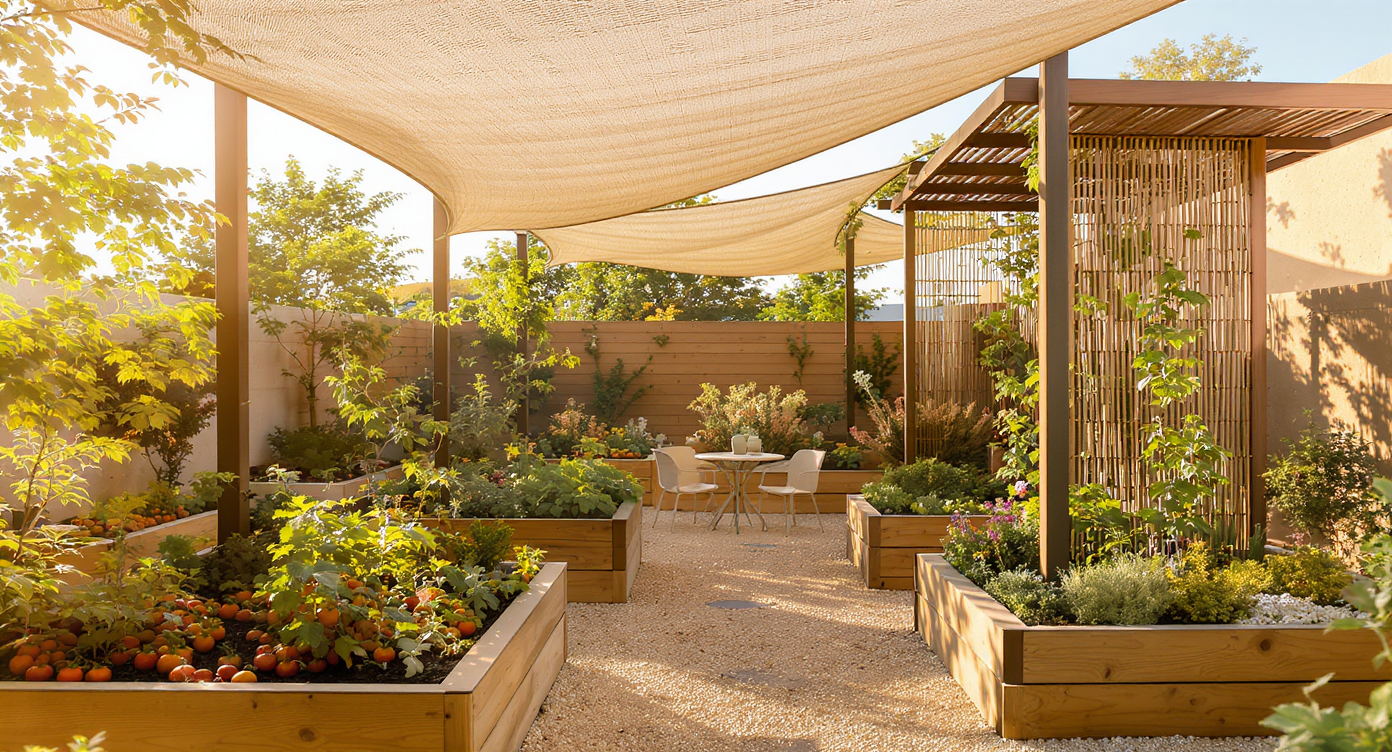
Even the best shade cloth fails if placed incorrectly. Sun direction and garden layout determine where protection matters most.
Shield the West and South Sides First
Afternoon sun is the harshest—especially from the west, where heat builds late in the day.
- Focus coverage on the western exposure of your garden
- In the Northern Hemisphere, southern-facing areas get the most intense light—prioritize these zones
Aim to block sunlight between 2 PM and 6 PM, when heat stress peaks.
Elevate Cloth Above Plant Canopy
Keep shade cloth at least 18–24 inches above plants.
- Prevents contact with foliage (reduces disease risk)
- Allows air circulation
- Creates a buffer zone that enhances cooling
Use tall stakes, T-posts, or existing structures like pergolas to elevate the fabric.
Secure Shade Cloth Against Wind and Wear

Shade cloth must survive summer storms and UV exposure. Poor installation leads to flapping, tearing, and failure when you need it most.
Use Wind-Resistant Installation Techniques
Mesh fabric allows wind to pass through—40% cloth handles 30–35 mph gusts.
- Avoid stretching too tightly—slight sag allows movement
- Weave nylon line through grommets to distribute tension
- Wrap corners around T-posts and secure with zip ties
- Run ropes behind posts, not over them, to prevent uplift
Choose Durable Materials That Last
Longevity depends on material quality and hardware.
- Select UV-stabilized, knitted polyethylene cloth
- Knitted: flexible, resists unraveling (best for adjustable setups)
- Woven: stronger, longer-lasting (ideal for permanent frames)
- Add custom grommets every 12–24 inches for reinforcement
Never use cotton rope—nylon clothesline only. Cotton swells in humidity and degrades in UV light.
Maximize Benefits Beyond Cooling
Shade cloth does more than reduce heat. Used wisely, it transforms your garden’s entire ecosystem.
Cut Water Use by Up to 50%
By lowering soil and air temperatures, shade cloth slows evaporation and keeps moisture consistent.
- Less frequent watering needed
- Roots stay cooler and more active
- Ideal for drought-prone or water-restricted areas
In dry climates, this can mean the difference between thriving plants and constant irrigation.
Reduce Pest and Disease Pressure
Stressed plants emit chemicals that attract insects. Healthy, shaded plants stay under the radar.
- Fewer aphids, spider mites, and whiteflies
- Lower risk of early blight and leaf spot
- Prevents sunscald on fruit—common in tomatoes and peppers
Bonus: birds, squirrels, and deer often avoid entering shaded tunnels.
Extend Harvest Seasons by 2+ Months
Shade cloth isn’t just for summer—it helps stretch spring and fall growing windows.
- Keeps soil cool in early summer, delaying bolting in lettuce and spinach
- Allows peas to keep flowering past 80°F
- Lets cool-season crops produce into July
- In hot zones (Florida, Texas), extends harvests by 2+ months
Support Pollination and Airflow Under Shade Cloth
A common concern: does shade cloth block pollinators? Not if you design for access.
Allow Bee Pathways for Squash and Cucumbers
Cucumbers and squash need bees. Plant them on the edges of tunnels or leave open gaps on the sides.
- Bees can enter from ground level
- Wind-pollinated crops (tomatoes, peppers, eggplants) only need light shaking
No need to remove cloth daily—just ensure some openness for insect movement.
Promote Air Circulation to Prevent Mold
Stagnant air leads to mold and mildew. Design your setup to breathe.
- Leave sides partially open
- Use removable clips for quick adjustments
- Lift cloth on cooler, cloudy days to refresh airflow
- Avoid sealing the structure completely
Good airflow keeps humidity low and plants strong.
Avoid Common Mistakes That Reduce Effectiveness
Even experienced gardeners make errors that reduce performance or damage equipment.
Don’t Install Too Late
Waiting until leaves are scorched means you’ve already lost productivity. Prevent stress—don’t treat it.
Install by mid-June at the latest, or earlier if heat arrives fast.
Don’t Use the Wrong Shade Level
- 80% cloth on tomatoes = weak, leggy plants
- 30% on lettuce in Texas = early bolting
Match percentage to crop and climate.
Don’t Block All Light
Shade cloth is not a tarp. It should filter light, not create darkness. If your garden looks like dusk, you’re using too much coverage.
Don’t Skip Adjustability
Rigid, permanent covers limit flexibility. Use clips, ties, or roll-up sides so you can adapt to daily conditions.
Expert Tips for Best Results
Follow these pro strategies to get the most from your shade cloth investment.
Measure Before You Buy
Always measure your garden space and add 1–2 feet of overhang on all sides for secure anchoring.
Order custom-cut cloth with grommets if needed.
Reuse Year After Year
With proper care, quality shade cloth lasts 3–5 years or more.
- Remove during winter to prevent snow damage
- Store rolled in a dry, dark place
- Avoid folding sharply—crease points weaken fibers
Combine with Other Season Extenders
Pair shade cloth with:
- Floating row covers (for frost protection in spring/fall)
- Drip irrigation (to maximize water savings)
- Mulch (to further cool soil and retain moisture)
Layered systems give total season control.
Frequently Asked Questions About Using Shade Cloth in Garden
When should I install shade cloth in my garden?
Install shade cloth when UV index reaches 8–9 or daytime temperatures consistently hit 85°F+. In most zones, this is late May to mid-June. Don’t wait for visible plant damage—install proactively to prevent stress.
Can I leave shade cloth on all summer?
Yes, but only if it’s adjustable. Remove or lift the cloth on cooler days (below 88°F) to maximize light. By September, UV levels drop enough that full sun becomes beneficial again.
Does shade cloth block pollinators?
No—if designed properly. Leave open gaps or plant pollinator-dependent crops like squash on tunnel edges. Bees can enter from ground level, and wind-pollinated crops (tomatoes, peppers) only need light shaking.
How do I keep shade cloth from blowing away?
Use a cable-and-grommet system with nylon clothesline woven through grommets. Wrap corners around T-posts and secure with zip ties. Run ropes behind posts, not over them, to prevent uplift in wind.
What shade percentage is best for tomatoes and peppers?
Use 40–50% shade cloth for tomatoes and peppers. This reduces heat stress, prevents fruit drop, and keeps plants in fruiting mode during heatwaves—without limiting light needed for growth.
Can I use shade cloth in a greenhouse?
Yes. Shade cloth is commonly used in greenhouses during summer to reduce internal temperatures by 10–15°F. Use 40–50% for vegetable crops and install it on the outside for maximum cooling effect.
Key Takeaways for Using Shade Cloth in Garden
Using shade cloth correctly transforms summer gardening from a battle against heat into a season of steady harvests. The core principles are simple: install by mid-June, choose 40–50% shade for warm-season crops, and build a removable, adjustable system so you can respond to daily conditions. Elevate the cloth 18–24 inches above plants, focus on west and south exposures, and always use UV-stabilized, knitted polyethylene with nylon ties.
With the right setup, you’ll reduce water use by up to 50%, extend harvests by weeks or months, and grow healthier plants with fewer pests and diseases. Whether you’re in Texas or Maryland, how to use shade cloth in garden is one of the most impactful skills for resilient, productive growing. Start measuring your beds now—your plants will thank you when the heat hits.