There’s nothing quite like biting into a sun-warmed, homegrown strawberry—juicy, sweet, and bursting with flavor. If you’ve ever wondered how to plant strawberries in a garden successfully, the secret lies in preparation, timing, and knowing which method fits your space. Whether you’re working with a sprawling yard or a small patio, you can grow a thriving strawberry patch using either traditional matted rows or space-saving vertical towers. This guide walks you through every critical step—from soil testing and planting depth to first-year care and harvest timing—so you can avoid common mistakes and enjoy bountiful yields for years.
You’ll learn how to choose healthy crowns, adjust your soil pH to the ideal 6.2, and plant at the perfect time to ensure strong establishment. We’ll compare in-ground beds with vertical systems like the GreenStalk tower and three-tier cascade, showing you how to maximize yield in any space. Most importantly, you’ll discover why skipping the first harvest leads to bigger crops later. With clear, actionable steps and pro tips, this guide gives you everything you need to grow strawberries like a seasoned gardener.
Test Soil and Adjust pH to 6.2

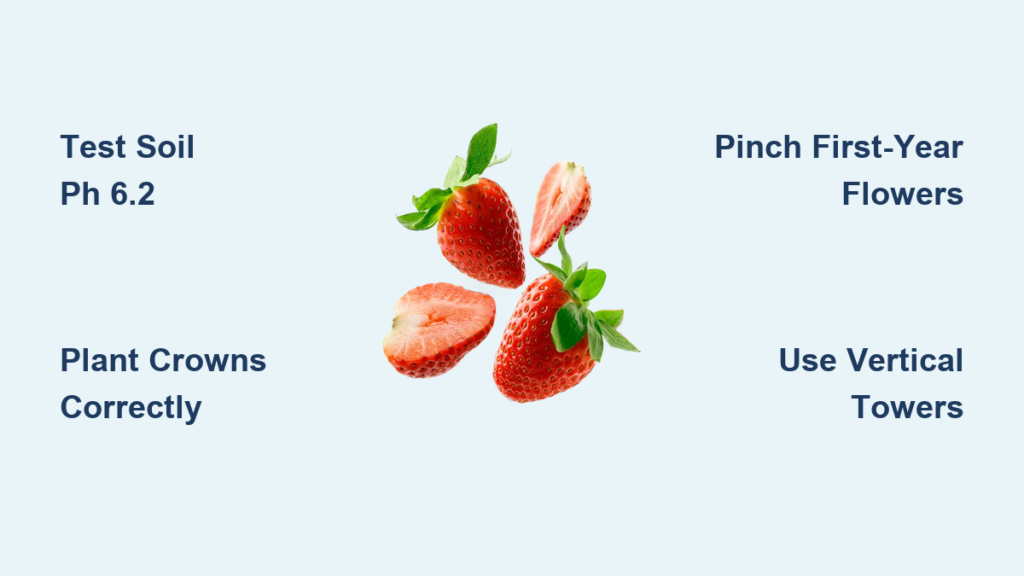
Before planting, test your soil to ensure it supports strong strawberry growth. Strawberries thrive in slightly acidic conditions, and the optimal pH is 6.2—this level makes nutrients most available and helps roots absorb them efficiently. Use a reliable soil test kit to check your garden bed. Based on the results, add lime to raise pH or sulfur to lower it. Skipping this step can result in stunted plants, poor flowering, and increased disease risk.
Follow Soil Test Fertilizer Recommendations
Your soil test will also guide fertilizer use. Apply only what the test recommends—over-fertilizing promotes leafy growth at the expense of fruit. For in-ground beds, amend the soil before planting. In vertical systems, skip garden soil entirely and use high-quality potting mix, which is weed-free, well-draining, and pre-balanced for container growing.
Choose the Right Planting Time
Planting at the right time is crucial for strong root development. In cold climates like Maine, the best window is May into early June. Strawberries tolerate cool soil and light frost, so don’t wait for perfect weather. The real danger is planting too late—once soil temperatures rise above 70°F, young plants struggle to establish, leading to weak growth and poor survival.
Avoid Late Planting Stress
After early June, hot soil stresses new plants. Roots dry out quickly, and energy goes toward survival instead of growth. If you miss the spring window, fall planting may work in milder zones. But for most gardeners, spring is the ideal time to get strawberries in the ground.
Select Healthy Dormant Crowns

Start with strong, disease-free plants. Look for dormant crowns—the central base of the plant with roots and a growing bud. A healthy crown has firm, plump tissue (white or green) and creamy yellow roots. Avoid any with black spots, mold, mushiness, or dried-out roots. These are signs of poor storage and will likely fail to thrive.
Use Bare-Root Runners for Vertical Systems
For vertical towers, choose bare-root runners—cold-stored, ready-to-plant stock. These establish quickly and are ideal for container growing. Select three different varieties to stagger harvests and reduce the risk of total crop loss. Plant two of each variety per tier to ensure continuous production and genetic diversity.
Prepare Soil or Potting Mix
Soil prep varies by system. In-ground beds need deep, well-drained soil enriched with organic matter. For vertical systems, use the right potting mix to ensure proper drainage and nutrient availability.
Mix Potting Blend for Cascade Systems
For a three-tiered strawberry cascade, blend 50% all-purpose potting mix with 50% soil-based potting mix. This combination holds moisture while providing structure and nutrients. Fill each pot halfway before stacking to allow room for planting.
Use Premium Mix for Vertical Towers
For five-tiered towers like the GreenStalk system, use high-quality all-purpose potting mix. Avoid garden soil—it compacts and can introduce pests. Each tier should also get 1 heaped tablespoon of slow-release organic fertilizer (blood, fish, and bone meal), lightly mixed in to feed plants over the season.
Plant in Matted Rows or Vertical Towers
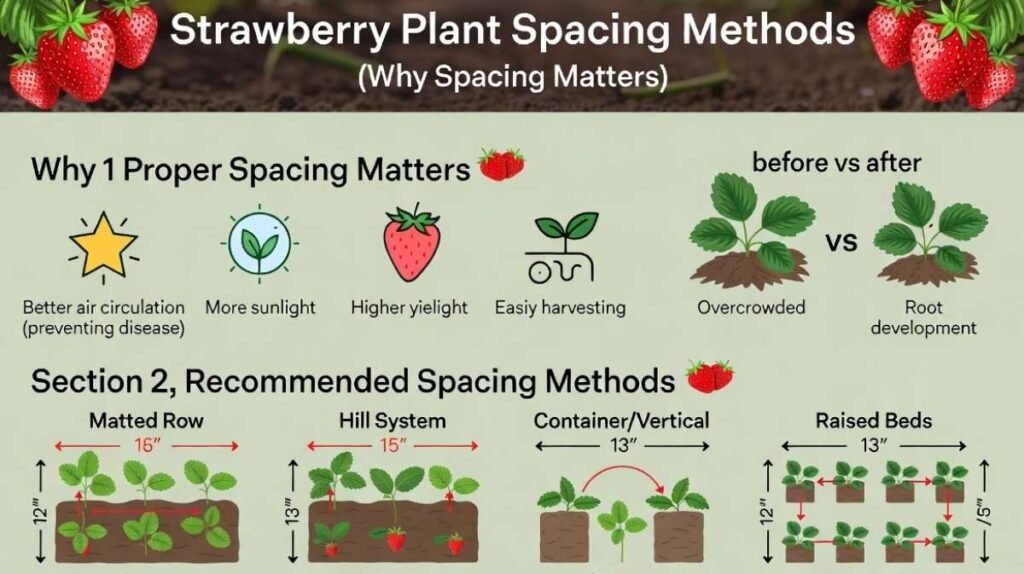
Two main systems dominate home strawberry growing: traditional matted rows and modern vertical towers. Each has pros and cons depending on your space, time, and goals.
Space Plants 18 Inches Apart in Rows
In a matted row system, space plants 18 inches apart within the row and 4 feet between rows for easy access. This spacing allows room for runners to spread and form a dense, productive bed. Adjust based on variety:
• Low-runner types (e.g., All Star): Plant 12 inches apart—they spread less
• High-runner types (e.g., Sparkle): Space 24–30 inches apart to let them fill in naturally
Trim Roots Without Overcutting
If roots are long or tangled, trim them—but never remove more than 25% of root length. Over-trimming weakens the plant. After trimming, spread roots out straight in the planting hole to encourage even growth.
Use the Flat Bar Method for Fast Planting
For large beds, use an 8-inch flat bar with a rounded nook. Push it straight down, place the crown, and set the plant. This method is faster than a trowel and ensures consistent depth. For small gardens, a standard trowel works fine.
Set Crown at Correct Depth
Planting depth is the most common mistake. The crown should be halfway covered with soil—not buried, not exposed.
Avoid Crown Rot and Drying
• Too deep: Burying the growing point causes crown rot
• Too shallow: Exposed roots dry out and kill the plant
In vertical towers, the rule shifts slightly: plant the crown just above the soil level. This prevents rot in containers where moisture lingers longer.
Build a Three-Tiered Strawberry Cascade
A strawberry cascade is a simple DIY vertical option using three nested pots.
Assemble Pots with Bamboo Guide
- Fill the largest pot halfway with potting mix
- Insert a bamboo cane through the drainage hole to keep layers aligned
- Stack the medium pot, fill halfway
- Add the smallest pot and fill to the top
- Plant three strawberries in the bottom, two in the middle, one on top
Use colorful buckets or repurposed containers as long as they have drainage holes and decrease in size.
Water Thoroughly After Planting
New cascades need consistent moisture. Water deeply after planting and during dry spells. Check daily until plants are established.
Set Up a Five-Tier Strawberry Tower
For high yields in small spaces, the five-tier vertical tower is unmatched.
Fill and Fertilize Each Tier
Fill each tier with premium potting mix. Add 1 tablespoon of slow-release organic fertilizer per tier and mix lightly. This feeds plants for months without extra feeding.
Plant Six Strawberries Per Tier
Use 30 bare-root plants (10 of each of three varieties). Plant two of each variety per tier to spread out harvest times. Position each crown just above the soil to prevent rot.
Stack Tiers and Prime the System
- Water plants before stacking
- Stack tiers, ensuring feet align perfectly with the tier below
- Insert watering discs into the center, aligning holes with planting pockets
- Place the reservoir on top
- Fill the reservoir until water drips from the base—this primes the system and ensures all pockets are saturated
Remove Flowers in the First Year
This is the golden rule: do not harvest fruit the first year. Instead, pinch off all flower clusters as soon as they appear in the bud stage.
Pinch Buds to Boost Future Yield
Use your fingers to pinch off buds between thumb and forefinger. Wait until buds form—once fruit starts, the stem hardens and requires scissors. Removing flowers redirects energy to:
• Root development
• Leaf growth
• Runner production
This investment pays off with a much larger harvest in year two.
Manage Runners to Build a Dense Mat
Runners are long stems that grow new daughter plants. In a matted row system, they’re essential for filling out the bed.
Pin Runners Into Place
Guide runners into the space between plants and pin them down with:
• A small clump of soil
• A rock
• A bent wire hairpin
This encourages them to root and form a 18–24 inch wide mat—the ideal width for next year’s harvest.
Keep Bed Width Under Control
Don’t let runners spread beyond the bed. Gently pull them back and pin them within the 18–24 inch zone. This keeps the bed manageable and productive.
Provide 6+ Hours of Sun Daily
Strawberries need at least 6 hours of direct sun to flower and fruit well. Less sun means fewer berries and leggy growth.
Rotate Vertical Towers for Even Light
Vertical towers should be rotated a quarter-turn daily. This prevents one side from shading the other and ensures all plants get equal sun. It’s a simple habit that dramatically improves yield.
Water Consistently and Efficiently
Moisture is critical, especially during establishment.
Use Reservoir System for Vertical Towers
The integrated reservoir in tower systems delivers water evenly to all pockets with minimal waste. Top it up regularly, especially in hot weather. For young plants, supplement with hand-watering until roots reach the lower tiers.
Water In-Ground Beds Deeply
Traditional beds need thorough watering at planting and during dry spells. Keep soil consistently moist but not soggy. Drip irrigation or soaker hoses work well for even coverage.
Protect Plants from Pests
Strawberries attract pests, but smart design reduces risk.
Eliminate Slugs with Vertical Growing
Elevating plants on towers removes slug and snail access—a major advantage over ground-level beds. In traditional gardens, use barriers or organic baits.
Cover with Netting to Stop Birds
When fruits begin to ripen, cover plants with fine netting. Birds love strawberries and can strip a patch overnight. Install netting early to avoid surprise losses.
Harvest at the Right Time
Timing your harvest ensures peak flavor and encourages more fruit.
Expect Berries 7–10 Weeks After Planting
• Flowering: Begins 4–6 weeks after planting
• Ripening: Berries mature 3–4 weeks after flowers open
First Harvest: Year Two for Beds, Same Season for Towers
• Matted row beds: Harvest in early summer of year two
• Vertical towers: Often produce within weeks of planting—some even fruit in the first season
Harvest regularly to keep plants producing. Pick berries when fully red, dry, and slightly firm.
Choose Varieties for Your System
Variety choice affects yield, timing, and care.
Mix Three Varieties in Vertical Towers
Planting three different types spreads out harvests from early to late season. It also reduces the risk of losing your entire crop to disease or weather.
Consult Local Extension for Best Picks
For in-ground beds, check your local Cooperative Extension website. They recommend varieties proven in your climate. All Star (low-runner) and Sparkle (high-runner) are reliable choices in many regions.
Avoid Common Planting Mistakes
Even experienced gardeners make errors. Here’s how to avoid them:
Don’t Plant Too Deep or Too Shallow
• Too deep: Crown rots
• Too shallow: Roots dry out
Always aim for halfway coverage in ground beds, just above soil in towers.
Never Harvest First-Year Fruit
It’s tempting, but picking early berries weakens the plant. Pinch all flowers to build strength for next year.
Don’t Delay Planting
Late planting in hot soil stresses young plants. Stick to the May–early June window in cold climates.
Frequently Asked Questions About Planting Strawberries
When is the best time to plant strawberries?
Plant strawberries in May to early June in cold climates. They tolerate cool soil and light frost, so plant as soon as the ground can be worked. Avoid planting when soil temperatures exceed 70°F, as this stresses young plants.
How deep should I plant strawberry crowns?
In in-ground beds, plant the crown so soil covers halfway up—not buried, not exposed. In vertical towers, place the crown just above the soil level to prevent rot in moist container conditions.
Should I remove flowers the first year?
Yes. Pinch off all flower clusters in the first year to redirect energy into root development, leaf growth, and runner production. This leads to a much larger harvest in year two.
Can I grow strawberries in containers?
Yes. Vertical towers and cascading pots are excellent for container growing. Use high-quality potting mix, ensure good drainage, and rotate towers daily for even sun exposure.
How many strawberries can I grow in a vertical tower?
A five-tier tower holds 30 plants—six per tier. With proper care, one tower can produce hundreds of berries in a single season, yielding up to four times more than traditional beds in the same footprint.
How do I prevent slugs from eating my strawberries?
Grow vertically—elevating plants on towers eliminates slug access. For ground-level beds, use organic slug baits, copper tape barriers, or diatomaceous earth around the plants.
Key Takeaways for How to Plant Strawberries in a Garden
To grow strawberries successfully, start by testing your soil and adjusting pH to 6.2, then plant healthy dormant crowns in May to early June. Whether using matted rows or vertical towers, proper planting depth is critical—halfway covered in ground beds, just above soil in containers. For maximum yield, pinch off all flowers in the first year to build strong plants for year two.
Vertical systems offer big advantages: higher yields, no slugs, easy harvesting, and automated watering. But both methods require 6+ hours of sun, consistent moisture, and runner management. By following these proven steps—from soil prep to pest protection—you’ll enjoy a steady supply of sweet, homegrown strawberries for years to come.