Hanging a garden flag is a simple way to express your values, celebrate a season, or add color to your outdoor space. Whether you’re displaying a Pride flag, a holiday design, or a custom message, knowing how to hang a garden flag properly ensures it stays secure, looks great, and withstands the wind. Most garden flags measure 12″ x 18″ and are designed to slide onto a specialized pole system that’s easy to install in lawns, flower beds, or along walkways.
The right setup keeps your flag from twisting, wrapping, or blowing off in gusts. With the correct accessories—like cinch holders, bottom clips, and rubber stoppers—you can achieve a clean, stable display. This guide walks you through every step, from assembling your pole to anchoring the flag against strong winds. You’ll also learn pro tips from real users, common mistakes to avoid, and how to maximize visibility and durability.
Choose the Right Flag & Pole
Confirm Your Flag Is 12″ x 18″
Make sure your garden flag measures 12 inches by 18 inches—the standard size for most residential poles. Flags outside this range may not fit properly or could strain the pole. This size offers ideal visibility near walkways and gardens without being too bulky.
Match the Pole to Your Flag
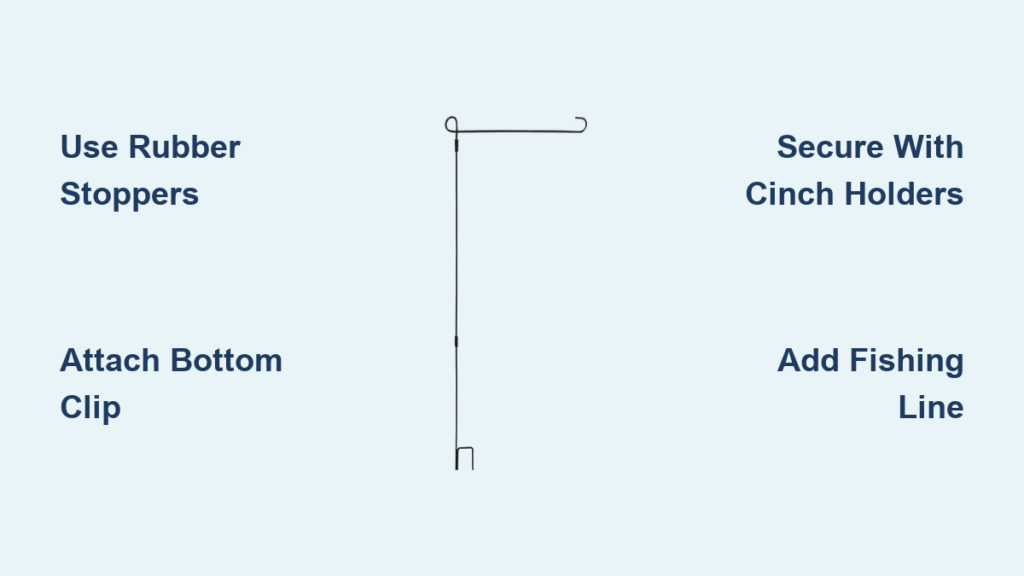
A typical garden flag pole stands about 28 inches tall and includes:
• An iron vertical stake
• A horizontal top bar
• Plastic connectors
This design allows the flag to hang flat and rotate with the wind. The iron construction resists bending, while the plastic joints make assembly tool-free and simple.
Check That All Accessories Are Included
Your pole should come with:
• Two cinch holders – to lock the flag in place on the bar
• One bottom clip – attaches the flag’s lower edge to the vertical pole
• Rubber stoppers – prevent the flag from sliding off the ends
These parts work together to keep your flag centered, readable, and wind-resistant. Without them, your flag is at risk of damage or loss.
Assemble the Flag Pole
Attach the Horizontal Bar to the Vertical Stake
Connect the top bar to the vertical pole using the plastic joints. Most models snap together easily—no tools required. If you’re unsure, refer to the manufacturer’s video instructions for a clear visual guide.
Pro Tip: Even if you’re not handy, users consistently say this step is “super easy” and takes less than a minute.
Install Rubber Stoppers on Both Ends
Slide a rubber stopper onto each end of the horizontal bar. These small caps are essential—they stop the flag from slipping off during high winds.
Warning: Skipping this step increases the risk of your flag flying away during storms.
Install the Pole in the Ground
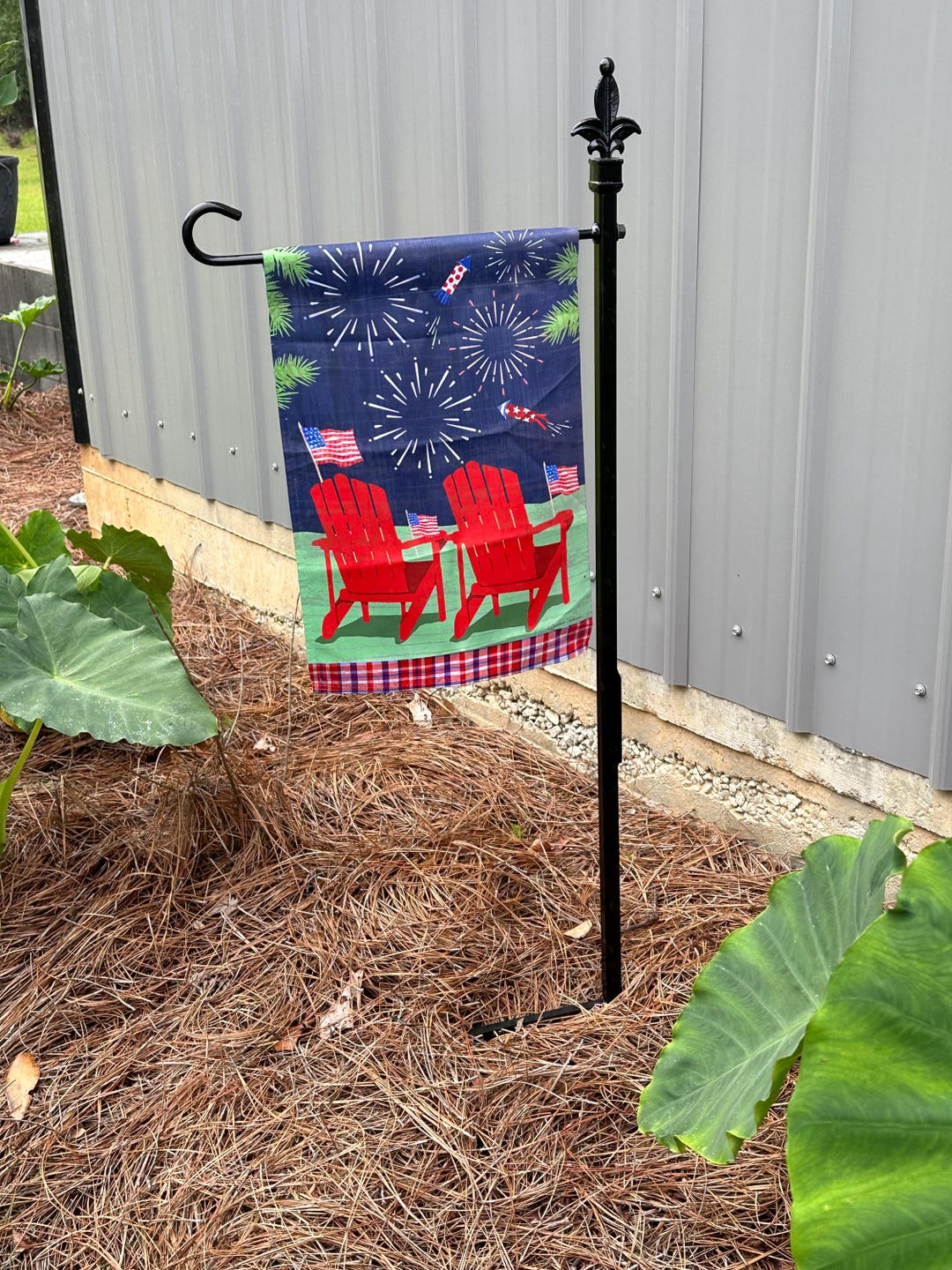
Pick a Firm, Visible Spot
Choose a location in your garden, along a path, or near your front yard where the flag will be seen and protected from constant wind. Avoid rocky or overly loose soil that can make installation difficult.
Push the Stake Into the Soil
Hold the base of the vertical pole and push it straight down into the ground. For better grip:
• Twist slightly as you push
• Tamp down the soil around the base
The pole should stand upright and feel stable—even in moderate wind.
Mount the Garden Flag
Open the Flag’s Top Pole Pocket
Locate the top hem of your flag, which has a sleeve (pole pocket) designed to slide over the horizontal bar. Gently open it to prepare for mounting.
Slide the Flag Onto the Horizontal Bar
Scrunch the top edge of the flag and slide it onto one end of the bar. Guide it across until it’s centered. The rubber stoppers will keep it from sliding off.
Visual Cue: The flag should hang evenly, with equal fabric on both sides.
Lock the Flag in Place With Cinch Holders
Slide one cinch holder onto each side of the flag where it meets the bar. This prevents shifting, bunching, or spinning in the wind.
Common Mistake: Forgetting to use cinch holders causes the flag to twist, making the message unreadable.
Prevent Wind Wrapping

Clip the Bottom Corner to the Vertical Pole
Attach the included clip to the lower corner of the flag and fasten it to the vertical stake. This stops the flag from rolling or wrapping around the pole in gusts.
User Feedback: People in windy areas like Iowa confirm this clip “holds it down perfectly” and keeps the design visible.
Add Fishing Line for Extra Stability
In high-wind zones, reinforce your flag with fishing line:
1. Tie one end to the lower right corner of the flag
2. Attach the other end to a lawn clip or garden stake in the soil
3. Adjust tension so the flag lies flat but still flutters naturally
Why It Works: This method prevents the entire pole from swiveling—a common issue even with proper assembly.
Optimize Visibility & Placement
Position for Close-Up Viewing
Garden flags are best seen from nearby—like from a sidewalk, porch, or path. Due to their 12″x18″ size, they may not be readable from the street.
Tip: Place your flag where neighbors and visitors can appreciate it up close.
Avoid Wind Tunnels Between Structures
Don’t install the pole in narrow spaces between buildings or fences where wind accelerates. These “wind tunnels” increase stress on the flag and pole.
Swap Flags for Seasons or Events
Rotate your display for holidays, Pride, or personal milestones. The portable design makes it easy to take down, store, or bring to events.
Maintain Flag Longevity
Inspect Hardware Monthly
Check every few weeks for:
• Loose cinch holders
• Worn clips
• Cracked rubber stoppers
• Rust or bending on the pole
Replace damaged parts quickly to avoid losing your flag.
Take Down During Storms
In severe weather or extended high winds, remove the flag temporarily. This reduces wear and extends its life.
Store Clean and Dry Off-Season
When not in use:
• Wipe or gently wash the flag (if fabric allows)
• Let it dry completely
• Store flat or rolled in a dry place
Avoid leaving it outside year-round unless it’s made for all-weather use.
Troubleshoot Common Issues

Flag Keeps Wrapping Around the Pole
Cause: Missing or loose bottom clip
Fix: Reattach the clip securely. Add fishing line anchoring for extra hold.
Pole Spins in the Wind
Cause: Loose soil or lack of corner anchoring
Fix: Repack soil around the base. Use fishing line tied to the lower corner.
Flag Slides Off the Bar
Cause: Missing or damaged rubber stoppers
Fix: Replace stoppers immediately. Never use the pole without them.
Design Isn’t Visible From the Street
Cause: Small flag size
Solution: Accept that garden flags are meant for close viewing. For street visibility, consider larger residential or mailbox flags.
Buy Smart: What to Know Before Purchasing
Choose a Quality Pole From Flags For Good
This Indianapolis-based company sells durable garden flag poles for $15.00 each. Their product is praised for:
• Strong iron construction
• Useful included accessories
• Compatibility with flags from other brands (like Bitter Southerner)
Customer Verdict: “The quality is superior to any I have found.”
Review Shipping & Return Details
• Shipping: USPS, 3–5 business days (continental US)
• Processing: Ships next day during normal periods
• Returns: 30-day window, free returns via email
• Packaging: Discreet black mailers made from ocean-bound plastic
Support Eco-Friendly Practices
All orders are carbon-neutral. The company funds verified carbon removal projects—over 61,000 tonnes removed to date.
Upgrade Your Display: Pro Tips
Use Flags From Any Brand
You’re not limited to one retailer. The standard 12″x18″ size works with flags from most companies, giving you design flexibility.
Gift a Complete Flag & Pole Set
Many customers buy poles and flags as gifts. Recipients report setting them up easily the next day—even without technical skills.
Invest in Long-Term Value
Yes, the pole costs $15.00—more than budget models—but it lasts longer. One user noted:
“You’ll save money down the road in replacement cost.”
Frequently Asked Questions About Hanging Garden Flags
How do you keep a garden flag from wrapping around the pole?
Attach the bottom clip to secure the lower corner of the flag to the vertical pole. For extra stability in windy areas, tie the corner to a lawn stake with fishing line.
Can you use any 12×18 flag with a standard garden pole?
Yes. Most 12″ x 18″ garden flags fit standard poles, regardless of brand. The pole from Flags For Good works with flags from Bitter Southerner and other retailers.
Why does my garden flag keep falling off the pole?
Your rubber stoppers are likely missing or damaged. These caps prevent the flag from sliding off the ends of the horizontal bar. Replace them immediately.
Do garden flags need special poles?
Yes. Garden flags require a specialized 28-inch pole with a horizontal bar, cinch holders, and a bottom clip. Standard flagpoles won’t support the small size or prevent wind wrapping.
How do you anchor a garden flag in high wind?
Use the included bottom clip and add fishing line tied from the lower corner to a garden stake. This dual method keeps the flag flat and readable.
Are garden flag poles durable?
Most are made of iron and last for years with proper care. One user reported breakage after a second order, but many say the quality is “superior” and worth the upfront cost.
Key Takeaways for Hanging Your Garden Flag Successfully
Hanging a garden flag doesn’t have to be complicated. With the right pole, a few simple accessories, and smart placement, you can display your message proudly and securely. Always center the flag, use all included hardware, and add fishing line in windy areas for best results.
To keep your flag looking great:
• Inspect it monthly
• Take it down during storms
• Store it properly off-season
Now that you know how to hang a garden flag the right way, you’re ready to enjoy a beautiful, windproof display all season long.