If you’ve heard that Epsom salt boosts plant growth, prevents blossom end rot, or makes tomatoes sweeter, you’re not alone. But before you sprinkle it across your garden, here’s what really works: Epsom salt is not a fertilizer—it’s a targeted supplement for magnesium and sulfur. Used correctly, it can help certain plants in specific conditions. Used incorrectly, it can do more harm than good.
The key to using Epsom salt in the garden lies in understanding your soil and your plants’ actual needs. Overuse can disrupt nutrient balance, block calcium and potassium absorption, and even worsen plant health. Yet, for container-grown tomatoes or cucumbers showing clear deficiency signs, a properly timed application can make a visible difference.
In this guide, you’ll learn exactly when and how to use Epsom salt—based on real plant symptoms and soil conditions—not myths. You’ll get a simple mix recipe, application timing, and clear warnings on common mistakes. Whether you’re growing vegetables, flowers, or herbs, this is your science-backed plan for using Epsom salt the right way.
Confirm Your Plants Need Magnesium First

Identify True Magnesium Deficiency Symptoms
Epsom salt only helps if your soil lacks magnesium. Most garden soils already contain enough, especially if you use compost or balanced fertilizers. Look for these specific signs:
• Yellowing between leaf veins (interveinal chlorosis) on older, lower leaves
• Leaves develop brown, crispy edges or drop early
• Stunted growth despite proper watering and feeding
🚨 Warning: Uniform yellowing of older leaves usually means nitrogen deficiency, not magnesium shortage. Magnesium deficiency shows as yellow patches with green veins still visible.
Rule Out Water and Nutrient Stress
Before reaching for Epsom salt, check these common causes of poor plant health:
• Is the plant getting consistent moisture?
• Has it been recently fertilized with a complete formula?
• Is the soil compacted or poorly drained?
Many gardeners misdiagnose drought stress or nitrogen deficiency as magnesium deficiency. If your plants are in rich compost or receive regular feedings, they likely don’t need extra magnesium.
✅ Pro Tip: If you’re using compost, organic mulch, or a complete fertilizer like Miracle-Gro or AgroThrive, skip Epsom salt unless clear symptoms appear.
Make the Right Epsom Salt Solution
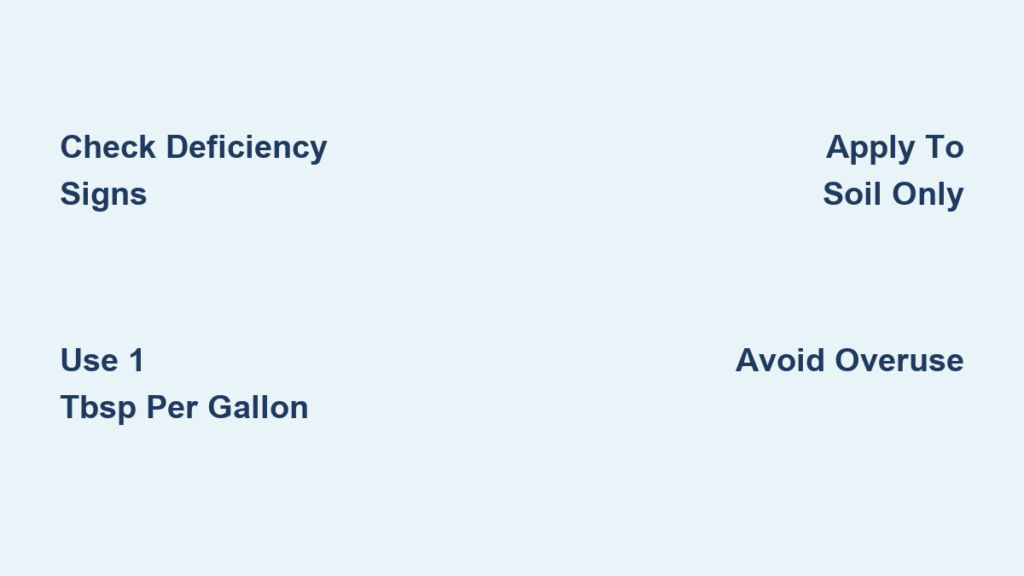
Mix 1 Tablespoon Per Gallon of Water
Use this ratio only when deficiency is suspected or in fast-leaching environments like containers:
Dissolve 1 tablespoon of Epsom salt in 1 gallon of warm water, then add cold water to fill if needed.
For larger batches:
• 2 gallons water → 2 tablespoons Epsom salt
• 4 gallons water → ¼ cup (4 tablespoons)
💧 Always dissolve the salt completely in warm water first to prevent clumping.
Why This Strength Is Ideal
This concentration delivers enough magnesium to correct mild deficiencies without risking nutrient lockout. Higher doses can interfere with calcium and potassium uptake, potentially causing blossom end rot or weak stems.
❌ Never exceed 1 tablespoon per gallon. More is not better and can harm your plants.
Apply Epsom Salt at Critical Growth Stages

At Transplanting Time
When planting seedlings or setting out transplants:
• Water each plant with 1 cup of the Epsom salt solution (1 tbsp/gallon mix)
• Best for containers, raised beds, or new garden soil with no prior enrichment
🌱 Example: A tomato in a 5-gallon pot benefits from this early boost, especially if grown in sterile potting mix.
This supports strong root development and early leaf growth when natural soil nutrients are low.
During Mid-Season for Fruiting Plants
Apply a second round only if:
• Plants are actively flowering or fruiting
• Older leaves show interveinal yellowing
• Grown in containers or sandy soil
Best timing: When tomato vines reach 5–6 feet tall or cucumbers begin to vine.
⏱️ Frequency: Once per month maximum. One well-timed application is often sufficient.
Overuse leads to salt buildup and can block essential nutrients like calcium.
For Container Gardens: Monitor and Reapply Cautiously
Potted plants lose nutrients quickly due to frequent watering. During peak growing months (May–August):
• Apply Epsom salt solution every 4–6 weeks
• Only if no other magnesium-containing fertilizer is used
• Always verify product labels before adding more
🔍 Example: If your liquid fertilizer already lists magnesium sulfate, skip Epsom salt entirely.
Avoid These 3 Major Epsom Salt Mistakes
Never Use It as a Weekly Tonic
❌ Spraying or drenching plants weekly with Epsom salt is ineffective and risky.
• It does not prevent blossom end rot (a calcium issue)
• It won’t fix poor pollination or heat stress
• It can harm soil microbes and beneficial fungi over time
✅ Reality: Healthy soil built with compost and balanced feeding outperforms any Epsom salt routine.
Don’t Spray Leaves Unless Diagnosed
While some recommend foliar sprays, soil drenches are safer and more effective.
Foliar applications can:
• Burn leaves in direct sunlight
• Offer only temporary relief
• Promote fungal diseases if foliage stays wet
🚫 Avoid misting tomatoes, peppers, or cucumbers. Always apply to the root zone.
Don’t Assume All Plants Benefit
Not every plant responds to Epsom salt. Use it selectively.
Likely to benefit:
• Tomatoes (especially in pots)
• Peppers
• Cucumbers, zucchini, melons
• Roses (if older leaves yellow between veins)
Unlikely to benefit:
• Leafy greens (lettuce, spinach)
• Beans and peas (they fix their own nitrogen)
• Plants in compost-rich garden beds
📋 Bottom Line: Use it only when needed, not as a blanket treatment.
Check Your Fertilizer Labels Before Adding Epsom Salt
Many Fertilizers Already Contain Magnesium
Before applying Epsom salt, review your current products. Many include magnesium sulfate or list Mg in the guaranteed analysis.
Look for:
• Magnesium sulfate in ingredients
• “Mg” or “S” in the nutrient analysis
• Mentions of Epsom salt in “Other Ingredients”
✅ Examples: Miracle-Gro, Vigoro, and AgroThrive often supply magnesium.
If your fertilizer already includes it, adding extra Epsom salt is unnecessary and may cause nutrient imbalances.
When Epsom Salt Won’t Help—And What To Do Instead

Blossom End Rot? Fix Calcium and Watering
Black, sunken spots on tomato or pepper bottoms mean calcium deficiency, not magnesium shortage.
Common causes:
• Inconsistent watering (most frequent)
• Root damage
• High salt levels in soil
✅ Fix: Maintain even moisture, use calcium nitrate spray, or apply gypsum. Do not use Epsom salt—it competes with calcium and can make the problem worse.
Poor Flowering or Fruit Set? Look Beyond Nutrients
If plants flower but don’t fruit:
• Check for extreme heat (above 90°F)
• Ensure pollinators are active or hand-pollinate
• Avoid high-nitrogen fertilizers that promote leaves over fruit
❌ Epsom salt won’t improve pollination or fruiting in healthy plants.
Proven Results: Tomatoes and Cucumbers

Container-Grown Tomatoes Respond Best
Tomatoes in pots are the top candidates for Epsom salt use.
Why?
• Potting mixes lack natural magnesium
• Frequent watering leaches nutrients
• Heavy fruiting demands more micronutrients
✅ Recommended: One application at transplant + one at first flowering (if yellowing appears).
🚫 Overdoing it? Expect leaf curl, blossom drop, or bitter fruit.
Cucumbers, Zucchini, and Melons May Benefit
These heavy feeders can show improvement in low-magnesium soils.
Best practice:
• Apply 1 tbsp/gallon solution at vining stage
• Repeat only if interveinal chlorosis develops
• Focus on container or sandy soil plantings
💡 Pro Tip: Train vining crops vertically to improve airflow and reduce stress—this helps more than routine Epsom salt use.
Build Long-Term Soil Health, Not Quick Fixes
Enrich Soil With Compost, Not Additives
The best way to prevent deficiencies is to build living soil.
Use:
• 2–3 inches of aged compost each season
• Organic mulch (straw, leaves, grass clippings)
• Cover crops in fall and winter
These feed soil life, retain nutrients, and slowly release magnesium and sulfur—without risking imbalances.
✅ Healthy soil rarely needs Epsom salt.
Test Soil Every 2–3 Years
A basic soil test reveals exactly what your garden lacks.
Look for:
• Magnesium levels (ideal: 25–50 ppm)
• Calcium-to-magnesium ratio (should be balanced)
• pH (tomatoes prefer 6.2–6.8)
📊 Labs like your local extension service offer affordable testing. Stop guessing.
If magnesium is sufficient, save the Epsom salt for soaking sore feet.
Key Takeaways for Using Epsom Salt Safely
When to Use Epsom Salt: Quick Reference
✅ Do use Epsom salt when:
• Growing in containers or raised beds with fresh mix
• Older leaves show interveinal yellowing
• No other magnesium source is applied
• Soil test confirms low magnesium
❌ Don’t use Epsom salt:
• As a weekly tonic
• On healthy, green plants
• To treat all yellow leaves
• In gardens with regular compost and fertilization
Step-by-Step Application Checklist
- Observe plants – Look for yellowing between veins on lower leaves
- Rule out water/nitrogen issues – Adjust care if needed
- Check fertilizer labels – Confirm no magnesium already added
- Mix solution – 1 tbsp Epsom salt per gallon of water
- Apply to soil – Water root zone, not foliage
- Wait and watch – Reapply only if symptoms persist after 2–3 weeks
- Stop after 2 applications – Never exceed monthly use
🕒 Total time: Less than 10 minutes per application.
Frequently Asked Questions About Epsom Salt in the Garden
Does Epsom salt make tomatoes sweeter?
There’s no strong evidence that Epsom salt directly increases tomato sweetness. Sweetness is primarily influenced by sunlight, variety, and consistent watering. However, correcting a true magnesium deficiency can improve overall plant health and fruit quality.
Can I spray Epsom salt on cucumber leaves?
Foliar sprays are not recommended. While some gardeners use them, research shows soil drenches are more effective and safer. Spraying can burn leaves in hot sun and increase fungal risk if foliage stays wet.
How often should I use Epsom salt on potted plants?
For container-grown vegetables, apply the 1 tbsp/gallon solution every 4–6 weeks during peak growing season (May–August), but only if no other magnesium source is used and deficiency signs appear.
Will Epsom salt prevent blossom end rot?
No. Blossom end rot is caused by calcium deficiency, often due to inconsistent watering. Using Epsom salt can actually worsen the problem by interfering with calcium uptake.
Do pepper plants need Epsom salt?
Peppers may benefit if grown in containers or low-magnesium soil and show interveinal yellowing on older leaves. Otherwise, they typically get enough magnesium from compost and balanced fertilizers.
Should I use Epsom salt in my vegetable garden every year?
No. Routine use is unnecessary and potentially harmful. Only apply Epsom salt when deficiency symptoms appear or a soil test confirms low magnesium. Healthy, compost-rich soil rarely needs it.
Final Thoughts on Using Epsom Salt in the Garden
Epsom salt has a place in your gardening toolkit—but only as a precise, targeted treatment. It’s not a miracle cure, nor is it required for most gardens. The real secret to thriving plants is healthy soil, consistent care, and accurate diagnosis.
Use Epsom salt only when you see clear signs of magnesium deficiency, especially in container-grown tomatoes, peppers, or cucumbers. Stick to the 1 tablespoon per gallon rule, apply to the soil, and never exceed monthly use.
Build your garden’s foundation with compost, mulch, and balanced feeding. Test your soil every few years. Save Epsom salt for when it’s truly needed—and let your plants thrive naturally the rest of the time.