Imagine harvesting crisp lettuce, fragrant basil, or juicy strawberries from a garden that doesn’t need soil—just water, light, and a smart setup. Creating a hydroponic garden at home is easier than you think, and with the right system, you can grow fresh produce year-round, even in small spaces. Whether you’re in an apartment, have a tiny balcony, or just want to maximize your growing potential, hydroponics offers a clean, efficient alternative to traditional gardening.
This guide shows you how to create a hydroponic garden using three proven DIY systems: horizontal recirculating, vertical tower, and wall-mounted. Each design uses affordable, readily available materials and requires no prior experience. You’ll learn how to assemble the systems, choose the right pump, maintain nutrient flow, and avoid common mistakes—all while saving space and boosting yields.
By the end, you’ll know exactly how to build, test, and maintain a thriving soil-free garden tailored to your space and goals.
Choose the Right Hydroponic System for Your Space

Not all hydroponic gardens work for every environment. The best system depends on your available area, what you want to grow, and how much maintenance you’re willing to do. These three DIY-friendly designs let you grow more in less space.
Build a Horizontal Recirculating Hydroponic System
Ideal for beginners and high-volume leafy green production, this system uses flat-laid PVC pipes to circulate nutrient-rich water continuously.
- Best for: Lettuce, spinach, kale, cilantro, and basil
- Space needed: 1–2 meters long by 60 cm wide (expandable)
- Flow design: Water runs from a reservoir through each pipe and returns for reuse
Cut 110 mm PVC pipes to 1 meter or longer. Drill planting holes every 15 cm in a staggered pattern to maximize space and allow staggered harvesting. Use plastic cups or net pots slightly smaller than the hole so they sit securely.
Connect one end of the pipe to a water pump via an elbow fitting. The opposite end gets a cap with a 1-inch tank adapter—this ensures better flow than smaller 3/4-inch fittings. Seal joints with plastic cable protection tape for easy disassembly.
How Much Water Flow Does a Horizontal System Need?
Aim for 1.5–2 liters per minute per pipe. For a 4-pipe setup, that’s 8 L/min or 480 liters per hour. To ensure reliability and extra aeration, choose a pump rated for double that capacity—in this case, 960 L/h.
Use a reservoir tank at least 4–5 times the total volume of your system. This prevents the pump from running dry and stabilizes nutrient levels. Mark water levels on the tank to track evaporation and refill on schedule.
Pro Tip: Prevent Root Drying During Power Outages
Position the water level so it reaches midway up the pipe when flowing. This keeps roots moist even if the pump stops temporarily.
Build a Vertical Hydroponic Tower for Small Spaces
Perfect for apartments or balconies, this upward-growing system uses a central PVC column to deliver water like rainfall.
- Best for: Herbs, strawberries, small leafy greens
- Space needed: Less than 0.25 m² floor space
- Height: Typically 1.5 meters tall, mounted over a 20-liter bucket
Start with a 110 mm PVC pipe, cut to 1.5 meters. Attach it vertically to a sturdy 20-liter bucket acting as the base and reservoir. Glue a lid to the top of the bucket, then drill a snug hole to insert the main pipe and secure it.
Drill planting holes along the tower at 20–30 cm intervals. Cut 45° angled slots and trim 2–3 cm off the tip of each cut. This creates space for roots to expand outward and receive nutrient solution freely.
How Water Reaches the Plants in a Vertical Tower
Place a submersible pump inside the bucket. Run a hose from the pump to a flowerpot placed at the top of the tower. Drill several small holes around the sides of the pot so water trickles down like rain through the tower.
Add a backup safety feature: drill a hole in the top of the flowerpot and connect a hose that feeds directly into the main pipe. If the side holes clog, water still flows down the center, preventing system failure.
Choose a Pump That Can Lift Water Higher Than Your Tower
For a 2-meter system, pick a pump rated for 2.5 meters or more. This ensures consistent pressure and full coverage, even as filters or lines develop minor resistance over time.
Install a Wall-Mounted Hydroponic Garden

Turn blank walls into productive growing zones using horizontally mounted PVC pipes.
- Best for: Basil, mint, chives, and other fast-growing herbs
- Installation: Securely mount to wall studs or use heavy-duty brackets
- Pipe spacing: 30–40 cm apart to avoid shading and allow airflow
Use 110 mm PVC pipes mounted horizontally. Space them evenly—closer for smaller plants, wider for bushy herbs. Install end caps with 1-inch tank adapters to link pipes and control water flow.
Attach elbows and return hoses at both ends of each pipe so water drains back into a central reservoir below. This creates a closed-loop recirculating system.
Pump Requirements for Wall Systems
The pump must lift water to the highest pipe. If your top line is 2 meters high, select a pump rated for at least 2.5 meters of lift capacity. Always test the system before planting.
Test for Leaks Before Adding Plants
Run the entire setup with plain water for 1–2 days before adding nutrients. Check all joints, connections, and mounting points. Fix any drips or misalignments now to avoid messes later.
Pick the Best Growing Medium for Hydroponics
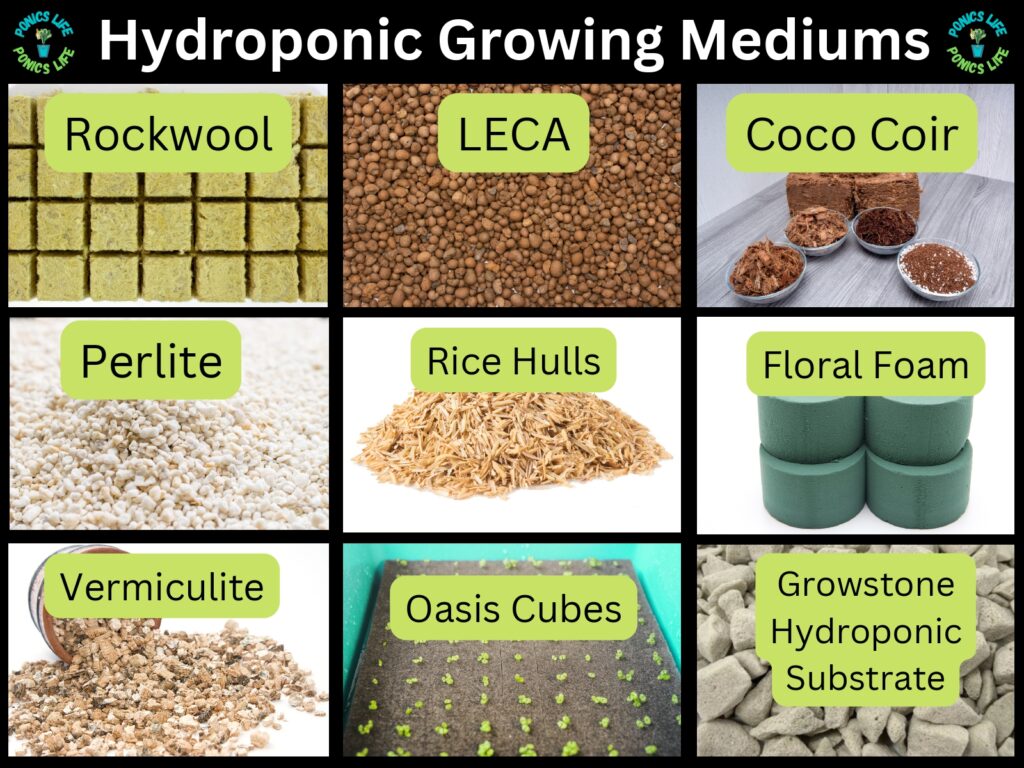
Without soil, plants need support and root access to oxygen and moisture. Choose a sterile, inert medium that holds water but drains well.
Top Hydroponic Growing Media Options
• Coconut coir: Renewable, excellent water retention, great for seedlings
• Rockwool cubes: Holds moisture and air; ideal for starting seeds
• Hydroton (clay pebbles): Reusable, provides excellent drainage and aeration
• Felt or synthetic fiber: Used to suspend roots and guide them into water flow
For the systems above, use plastic cups with drainage holes. Fill with coconut coir or Rockwool, then insert young plants. Push roots through a pad of synthetic fiber (like felt) placed at the bottom of the cup—this helps roots reach the water while keeping the stem stable.
Warning: Don’t Let Roots Hang Too Low
Ensure roots just touch the water surface. If water droplets are falling on them, they’re in contact. If submerged too deeply, roots may rot due to lack of oxygen.
Use synthetic fiber strips to gently support stems and prevent leaning, especially in vertical or wall systems where plants grow sideways.
Set Up a Reliable Nutrient Reservoir
The reservoir is the heart of your hydroponic garden. It stores water, nutrients, and oxygen—and keeps your plants alive.
Size Your Reservoir Correctly
Your reservoir should hold 4–5 times the volume of water in your system. For example, if your pipes hold 10 liters when full, use a 40–50 liter tank. This buffer prevents pump burnout and reduces how often you need to refill.
Use opaque, food-grade containers to block light and prevent algae growth. Label water levels clearly with a permanent marker.
Mix Nutrients the Right Way
Use a balanced hydroponic nutrient solution (look for “complete” formulas with N-P-K and micronutrients). Follow label instructions based on tank size.
Never add nutrients until after you’ve tested the system with plain water. Premature feeding can damage pumps or create clogs.
Maintain Proper pH and Nutrient Levels

Even the best system fails if pH is off. Plants absorb nutrients best within a narrow range.
Keep pH Between 5.5 and 6.5
Outside this range, nutrients become unavailable, causing deficiencies like yellow leaves or stunted growth.
Use a digital pH meter or test kit to check levels weekly. Adjust with:
• pH up (potassium hydroxide or sodium bicarbonate)
• pH down (phosphoric acid or citric acid)
Calibrate your meter regularly for accuracy.
Replace Nutrient Solution Every 2–3 Weeks
Over time, plants deplete certain elements and salts build up. Drain, clean, and refill the reservoir every 14–21 days to maintain balance.
Rinse the tank with water (no soap) and inspect for biofilm or residue. Clean growing cups and media between crops to prevent disease.
Prevent Common Hydroponic Problems Early
Catch issues before they kill your plants with regular checks and smart design.
Stop Clogged Water Lines
Mineral deposits or root fragments can block flow, especially in vertical towers.
• Prevention: Use filtered water if your tap water is hard
• Fix: Flush lines with diluted vinegar (1:4 with water) monthly
Stop Algae Growth in Its Tracks
Green slime in reservoirs or pipes blocks light and consumes oxygen.
• Prevention: Use opaque materials, cover exposed water, and keep system out of direct sunlight
• Fix: Clean with hydrogen peroxide (3% solution at 3 mL per liter)
Prevent Root Rot Before It Starts
Brown, slimy roots mean poor oxygenation or overwatering.
• Cause: Poor aeration, warm water, or clogged flow
• Solution: Ensure air stones or splashing action (like rain pots) oxygenate water
• Prevention: Keep water temperature below 22°C (72°F)
Optimize Lighting for Indoor Hydroponic Gardens
If growing indoors, natural light isn’t enough. You’ll need supplemental lighting.
Maximize Sunlight for Balcony or Window Systems
Place systems in areas with 6–8 hours of direct sunlight (south-facing windows, balconies). Rotate plants occasionally for even growth.
Choose the Best Artificial Grow Lights
• LED grow lights: Energy-efficient, low heat, full spectrum
• T5 fluorescent tubes: Affordable, good for seedlings and herbs
• Placement: 15–30 cm above plants, on a timer for 12–16 hours/day
Avoid cheap “purple” LEDs without proper spectrum coverage. Look for full-spectrum white + red/blue models labeled for vegetative growth.
Grow the Best Plants for Hydroponic Systems
Start with crops that thrive in water-based environments.
Top Hydroponic Crops and Their Growth Times
| Plant | Growth Time | Notes |
|---|---|---|
| Lettuce | 4–6 weeks | Use staggered planting every 15 cm |
| Basil | 5–7 weeks | Prefers wall or horizontal systems |
| Spinach | 6 weeks | Needs cool temperatures |
| Strawberries | 8–10 weeks | Ideal for vertical towers |
| Mint | 6 weeks | Grows aggressively—keep contained |
Avoid These Plants in Small DIY Systems
• Tomatoes (too large, need deep roots)
• Carrots (require soil texture)
• Corn (needs pollination and space)
Use hydroponic-adapted seed varieties when possible. Some lettuces bolt (go to seed) faster in water-based systems—select slow-bolting types.
Scale Up Your Hydroponic Garden Gradually
Start with one system—like a single horizontal pipe or a mini tower—before expanding. Test, learn, and refine.
Once you’ve harvested your first crop, add another pipe, stack towers, or mount more wall units. Connect multiple systems to a central reservoir and pump for efficiency.
Upgrade to timers, air stones, or automated pH monitors as you gain confidence.
Frequently Asked Questions About Creating a Hydroponic Garden
What is the easiest hydroponic system for beginners?
The horizontal recirculating system is the easiest for beginners because it uses simple plumbing, has predictable water flow, and supports high yields of leafy greens with minimal maintenance.
Can I use tap water in my hydroponic garden?
Yes, but if your tap water is hard (high in minerals), it can clog lines and affect pH. Use filtered or reverse osmosis water if possible, or test and adjust pH after adding water to the reservoir.
How often should I change the water in a hydroponic system?
Replace the full nutrient solution every 14–21 days. Top off with plain water between changes to maintain volume, but never go longer than 3 weeks without a full flush and refill.
Do hydroponic plants grow faster than soil plants?
Yes, most hydroponic plants grow 20–30% faster because they absorb nutrients directly from water, reducing energy spent on root development and allowing more focus on leaf and stem growth.
Can I grow hydroponic plants without a pump?
Yes, but only in passive systems like Kratky. For recirculating, vertical, or wall-mounted systems, a pump is essential to deliver oxygen and nutrients consistently.
What should I do if my hydroponic plants have yellow leaves?
Yellow leaves usually mean nutrient deficiency or incorrect pH. First, test and adjust pH to 5.5–6.5. Then check nutrient levels and replace the solution if it’s older than 3 weeks.
Key Takeaways for Creating a Successful Hydroponic Garden
Creating a hydroponic garden at home is a smart, space-efficient way to grow fresh food year-round. Choose a system that fits your space—horizontal, vertical, or wall-mounted—and build it with simple materials like PVC pipes and food-grade tanks. Use the right pump, test for leaks, and maintain pH between 5.5 and 6.5.
Start with easy crops like lettuce, basil, or strawberries. Replace nutrients every 2–3 weeks, prevent algae and root rot, and use full-spectrum lighting if growing indoors. Begin small, learn from each harvest, and scale up with confidence.
Now that you know how to create a hydroponic garden, gather your materials, build your first system, and plant your first seedlings—your homegrown harvest is just weeks away.