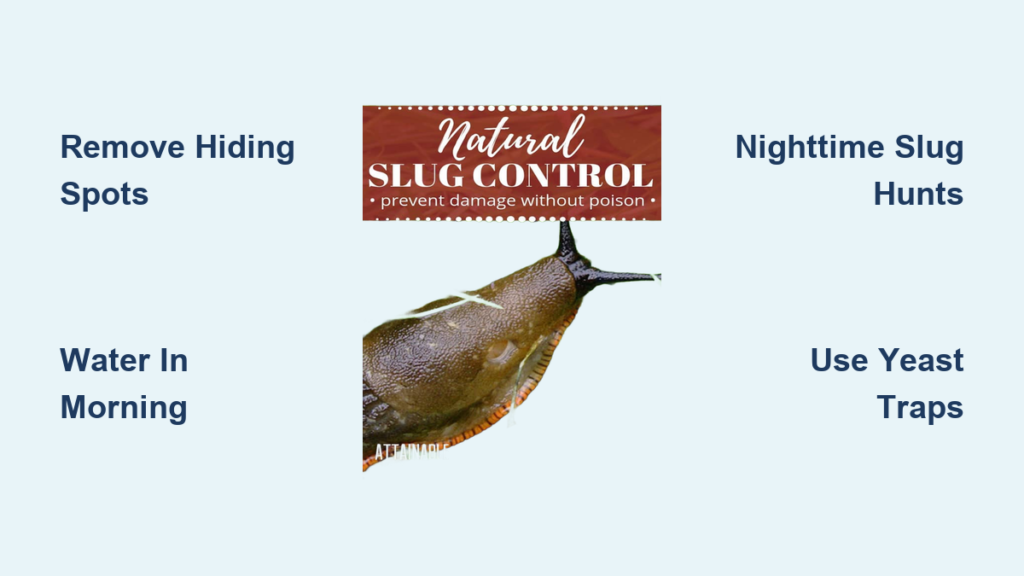
Waking up to shredded lettuce, missing seedlings, and glistening slime trails is every gardener’s nightmare—clear evidence that slugs have been feasting overnight. These moisture-loving pests thrive in cool, damp conditions and can decimate tender plants in a single night. While many turn to chemical slug pellets, those solutions often do more harm than good. Most contain EDTA, a toxic agent that kills beneficial earthworms and damages soil health. The better way? Use natural, sustainable methods that keep slugs out of your garden without harming the ecosystem.
Smart slug control isn’t about total eradication—it’s about population management. Some slugs, like the leopard slug, are actually helpful predators. The real goal is to make your garden less appealing to destructive species while protecting vulnerable plants. By combining smart watering, habitat modification, targeted traps, and natural predators, you can significantly reduce slug damage—without chemicals.
Here’s how experienced gardeners keep slugs out of their gardens—naturally and effectively.
Eliminate Slug Hiding Places
Slugs avoid sunlight and dryness, so they spend daylight hours tucked under cover. Removing their shelters makes your garden far less hospitable.
Why Debris Attracts Slugs
Slugs thrive under:
• Old flower pots, wooden boards, and trays
• Thick layers of leaves or decaying plant matter
• Dense ground cover or overgrown mulch
These spots retain moisture and block sunlight—perfect slug sanctuaries.
Pro Tip: A clean, open garden exposes slugs to birds, beetles, and drying sun, reducing their survival rate.
How to Make Your Garden Less Inviting
• Clear clutter from garden beds weekly
• Rake up fallen leaves and dead foliage
• Avoid placing raised beds under trees or dense shrubs
• Thin out overcrowded plants to improve airflow
Even small changes reduce humidity and make it harder for slugs to hide.
Shield Seedlings from Early Damage
Young plants are most at risk—slugs can destroy an entire row of seedlings in one night. The best defense? Avoid planting them directly in slug territory.
Start Vulnerable Crops Indoors
Begin these plants inside or in a greenhouse:
• Lettuce, spinach, and other salad greens
• Brassicas (kale, cabbage, broccoli)
• Celery, leeks, and onions
Transplant only after they develop 3–4 strong leaves. By then, they’re tough enough to withstand minor feeding.
Protect Direct-Sown Crops
Carrots, parsnips, and beets must be sown directly. To keep slugs away:
• Choose a sunny, well-drained site
• Clear all weeds and debris before planting
• Use cloches or fine mesh netting until seedlings are established
Even a lightweight row cover blocks slugs while allowing light and rain to pass through.
Switch to Morning Watering
Slugs come out at night, drawn to wet surfaces. Evening watering creates the ideal nighttime buffet.
Why Morning Watering Works
• Allows foliage and soil to dry before dark
• Reduces humidity that slugs depend on
• Discourages slug activity without extra effort
Bonus: Drier leaves also prevent fungal diseases like powdery mildew.
Best Practices for Watering
• Use drip irrigation or soaker hoses to keep leaves dry
• Water at the base of plants, not overhead
• Avoid overwatering—soggy soil attracts slugs
This simple shift in routine can cut slug damage by half.
Conduct Nighttime Slug Hunts

One of the most effective slug controls costs nothing—just 15 minutes after dark.
How to Hunt Slugs Effectively
- Wait 30 minutes after sunset when slugs emerge
- Use a headlamp or flashlight to scan under leaves and pots
- Pick off slugs by hand (wear gloves if preferred)
- Drop them into soapy water or relocate far from your garden
Repeat every 2–3 nights during spring and fall.
When to Hunt for Best Results
• After rain or heavy dew
• On cool, humid evenings
• Just after planting new seedlings
Pro Tip: Some gardeners feed collected slugs to chickens—nature’s clean-up crew.
Set Up Daytime Slug Traps
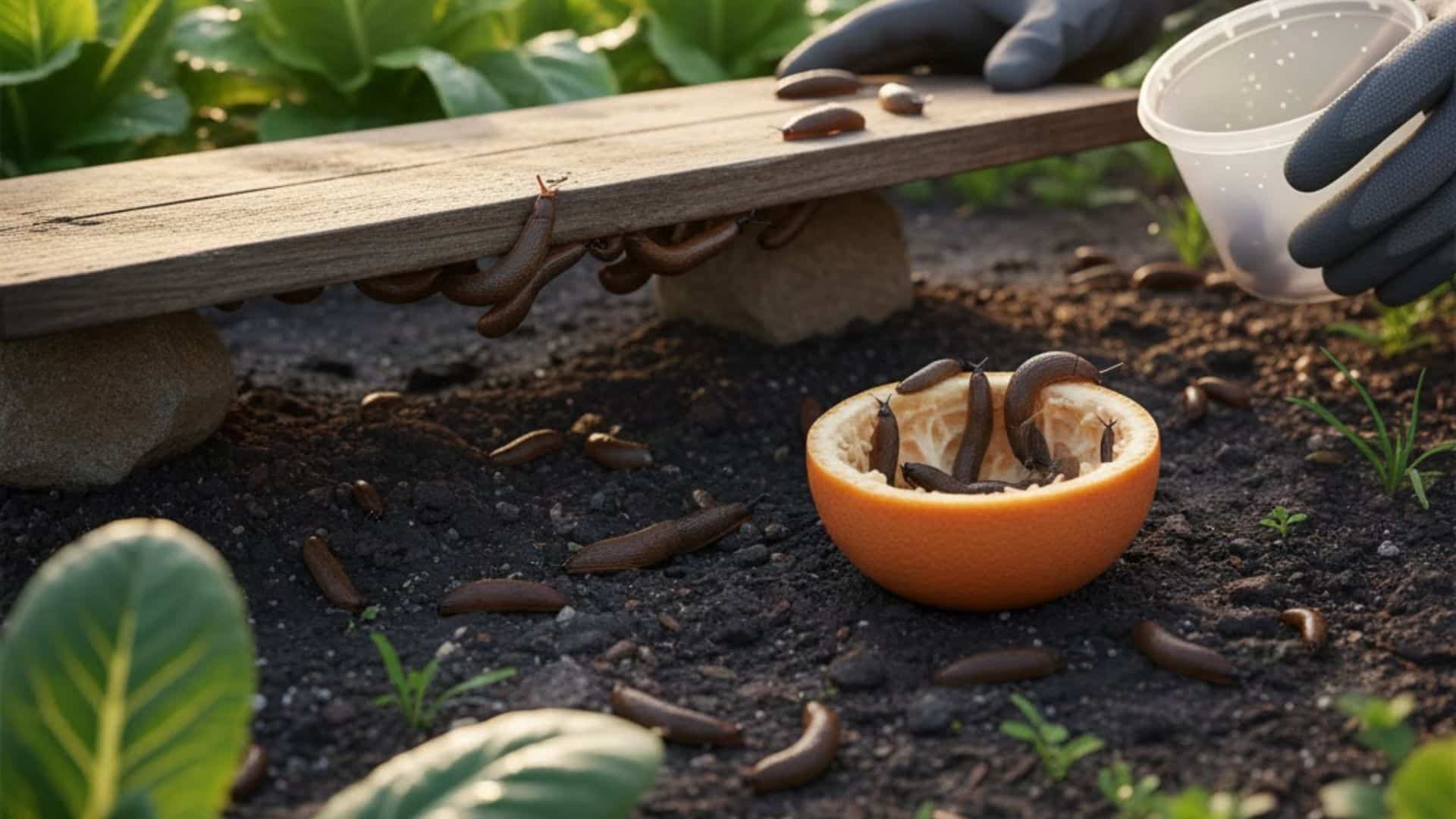
Can’t hunt at night? Use passive traps that lure slugs into hiding—so you can remove them by day.
Board and Stone Traps
• Lay flat wooden planks, stones, or shingles between rows
• Slugs crawl underneath to escape heat and light
• Lift traps each morning and remove slugs
Place near lettuce, strawberries, or hostas—common slug targets.
Leaf Traps with Rhubarb or Cabbage
• Lay large, inedible leaves upside down on damp soil
• Check every 2–3 days for hiding slugs
• Compost the leaves afterward
These biodegradable traps blend into the garden and require no special tools.
Why It Works: Slugs prioritize shelter over food during the day—use that instinct against them.
Build a Yeasty Slug Trap (Better Than Beer)
Beer traps are messy and attract more slugs than they kill. A yeast-flour mix is cheaper, longer-lasting, and more effective.
Step-by-Step: Make a Fermenting Slug Trap
- Mix:
• 1 cup flour
• 2 cups water
• 1 packet (7g) dry active yeast - Whisk into a thin, pancake-like batter
- Pour into a lidded container (e.g., ramekin or plastic cup)
- Cut two small notches near the top—just wide enough for slugs
- Bury the container so the notch sits slightly above soil level
- Fill with 1–2 inches of mixture
- Cover with a lid to keep out rain and beneficial insects
Place near damp zones—garden edges, compost piles, or under shrubs.
Maintenance Tips
• Check every 3–4 days for drowned slugs
• Empty and rinse the container
• Refill with fresh mixture every 10 days
The scent peaks after 3–5 days of fermentation—making it irresistible.
💡 Pro Tip: Unlike open beer traps, this method doesn’t kill ground beetles or other natural slug predators.
Avoid Toxic Slug Pellets
Even “organic” slug pellets can harm your soil. Many contain EDTA, which binds to metals and becomes toxic to earthworms.
Why Earthworms Are Essential
• Aerate soil and improve drainage
• Break down organic matter into plant food
• Strengthen root systems and soil structure
Killing earthworms weakens your garden’s foundation—making it more prone to pests.
Safer Alternatives
• Use iron phosphate-based pellets labeled EDTA-free
• Apply only around high-risk plants—and sparingly
• Combine with traps and barriers to reduce reliance
Better yet: skip pellets entirely and rely on prevention.
Boost Natural Slug Predators
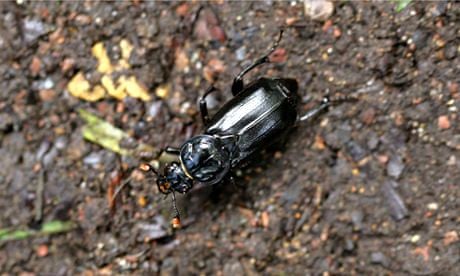
Encourage wildlife that eats slugs—nature’s free pest control.
Welcome These Slug Hunters
• Birds (robins, blackbirds, thrushes) – feed on slugs at dawn
• Frogs and toads – need a small pond or damp shelter
• Ground beetles – hide under logs and stones
• Hedgehogs – eat hundreds of slugs each night
How to Support Predators
• Leave a log pile or rock stack for shelter
• Add a shallow water dish for frogs and birds
• Avoid pesticides and slug pellets that kill beneficials
A balanced garden rarely suffers severe infestations.
Use Physical Barriers as Last Defense

For high-value plants, add a physical shield.
Copper Tape: The Electric Deterrent
• Apply around raised beds, pots, or plant collars
• Creates a mild electric shock when slugs touch it
• Lasts 1–2 years if kept clean and dry
Ensure no leaves or stems bridge the barrier.
Sharp Mulches: Eggshells & Diatomaceous Earth
• Sprinkle crushed eggshells or food-grade diatomaceous earth around plants
• Creates a rough, uncomfortable path for slugs
Reality Check: These lose effectiveness when wet—reapply after rain. Best used in dry weather and as part of a broader strategy.
Plant Slug-Resistant Borders
Some plants naturally deter slugs or mask the scent of tasty crops.
Best Deterrent Plants
• Rosemary, thyme, sage – strong aromatic oils
• Lavender – dry, woody texture slugs dislike
• Ferns, foxgloves, and geraniums – tough, unpalatable leaves
Plant them around vegetable beds as living barriers.
Expert Note: Companion planting alone won’t stop slugs—but it helps when combined with traps and habitat control.
Frequently Asked Questions About Keeping Slugs Out of Garden
Do coffee grounds really keep slugs away?
No strong evidence supports this. While slugs may avoid fresh coffee grounds temporarily, the effect disappears when wet. Used grounds can even increase moisture and mold—making conditions worse.
Are beer traps effective for slug control?
They work somewhat but have major drawbacks. Open beer traps attract more slugs to your garden and kill beneficial insects like ground beetles. A covered yeast-flour trap is more effective and eco-friendly.
Can chickens help control slugs?
Yes. Chickens eat slugs and are excellent natural pest controllers. Let them forage in your garden before planting or after harvest—but supervise to prevent plant damage.
What time of year are slugs most active?
Slugs peak in spring and fall when temperatures are cool and moisture is high. They slow down in summer heat and winter frost—but can remain active in mild climates year-round.
Do copper rings really stop slugs?
Yes, but only if properly installed. Copper creates a small electrical reaction when slugs touch it. Keep the strip clean and free of debris or leaves that could create a bridge.
Are there plants that slugs won’t eat?
Yes. Slugs avoid:
• Fuchsias
• Geraniums
• Lavender
• Rosemary
• Ferns
• Foxgloves
Use these as buffers around vulnerable crops.
Key Takeaways for Keeping Slugs Out of Your Garden
The most effective way to keep slugs out of your garden is prevention, not poison. Remove hiding spots, water in the morning, and protect young plants with covers or indoor starts. Use nighttime hunts and yeasty traps to reduce populations—naturally and safely.
Avoid EDTA-containing slug pellets that harm earthworms and soil health. Instead, encourage birds, beetles, and frogs that eat slugs. Combine copper barriers, deterrent plants, and smart watering to create a garden slugs simply don’t want to enter.
Your next step: Pick one method—like setting up a yeast trap or switching to morning watering—and start tonight. Small, consistent actions lead to long-term slug control—without harming your garden’s ecosystem.