A single snip with a contaminated pruner can spread deadly plant diseases like fire blight, powdery mildew, or tomato spotted wilt virus across your entire garden. How to disinfect garden tools is one of the most overlooked yet essential practices for protecting your plants. Soil, sap, and infected plant tissue harbor bacteria, fungi, and viruses that cling to metal surfaces long after use. Without proper sanitation, your tools become silent carriers of destruction. The solution? A simple, science-backed routine that takes just minutes but prevents costly crop losses.
The key to effective disinfection lies in a two-step process: first clean, then sanitize. Cleaning removes dirt and organic debris that shield pathogens from disinfectants. Skipping this step renders even the strongest sanitizer useless. Whether you’re pruning roses, harvesting vegetables, or dividing perennials, this guide delivers the exact methods, timing, and safety tips used by horticultural experts. You’ll learn which disinfectants kill viruses, how to store tools to prevent rust, and when to sanitize for maximum disease control—all based on research from university extension services and professional growers.
Clean Tools Before Sanitizing
Remove All Organic Debris First
Disinfectants fail on dirty tools. Soil, sap, and plant residue create a barrier that protects pathogens. Start by blasting off loose dirt with a garden hose on full spray. For stuck-on grime, gently scrape with a putty knife or plastic scraper—avoid metal tools that can scratch surfaces. Then soak tools in hot water mixed with ½ teaspoon of dish soap per gallon for 15–20 minutes. This breaks down oils and prepares metal for effective sanitizing. Rinse thoroughly with clean water and dry immediately with a lint-free cloth.
Why Cleaning Is Non-Negotiable
Organic matter neutralizes many disinfectants. Bleach reacts with proteins in soil and loses half its potency within two hours. Alcohol and commercial sprays cannot penetrate sticky residues like tree sap. Cleaning is like washing your hands before applying sanitizer—it’s the foundation of effective disinfection. Without it, pathogens survive and spread with your next cut.
Best Disinfectants for Garden Tools

Compare Your Sanitizing Options
Not all disinfectants are equal. Some kill viruses, others prevent rust, and a few are dangerous if mishandled. Choose based on your task, tool type, and safety needs. Below are the most effective options, backed by horticultural research.
Bleach: Only Choice That Kills Plant Viruses
A 10% bleach solution (1 part household bleach to 9 parts water) is one of the few disinfectants proven to eliminate plant viruses. Mix fresh each time—its strength drops rapidly. Soak tools for 30 seconds to 10 minutes, depending on exposure risk. Always rinse thoroughly with clean water afterward to prevent metal corrosion and avoid chemical burns on plant tissue. Use a dedicated plastic container and never reuse the solution.
Alcohol: Fast, No-Rinse Option for Healthy Plants
Use 70–100% isopropyl or ethanol alcohol for quick sanitation between healthy plants. Wipe or dip blades—no soaking needed. It evaporates fast, doesn’t corrode metal, and requires no rinse. However, alcohol does not reliably kill plant viruses, so avoid it after handling diseased material. Keep away from flames—it’s highly flammable.
TSP: Powerful but Requires Extreme Caution
Trisodium phosphate (TSP) at 10% concentration (1:9 with water) kills a broad spectrum of pathogens. Soak tools for at least 3 minutes, then rinse well. Wear gloves and eye protection—wet TSP granules cause chemical burns. Only use true TSP, not substitutes with non-sanitizing surfactants.
Pine Oil: Mild Option for Routine Use
A 25% pine oil solution (1 part pine oil to 3 parts water) offers moderate disinfection with low corrosion. Suitable for light-duty work on non-diseased plants. Check product labels—some “pine-scented” cleaners lack active sanitizing ingredients.
Commercial Horticultural Disinfectants: Professional-Grade Protection
For serious disease control, use:
– Quaternary ammonium compounds (e.g., Green-Shield®, KleenGrow™): Effective against fungi, bacteria, and viruses.
– Hydrogen dioxide formulas (e.g., ZeroTol® 2.0, Oxidate® 2.0): Safe for tools, soil, and greenhouse surfaces.
These are stable, non-corrosive, and labeled for agricultural use. Follow manufacturer instructions precisely.
Household Sprays: Convenient but Not Proven
Products like Lysol® are easy to use and non-corrosive, but lack research on plant pathogen control. Apply full-strength as a spray or dip. Not recommended when working with infected plants.
Step-by-Step Tool Disinfection Guide
Follow This Sanitizing Sequence
Use this five-step process every time:
- Scrub off all visible dirt with soapy water and a brush.
- Rinse thoroughly under clean water.
- Apply disinfectant by dipping or wiping for the required time.
- Rinse if required—bleach and TSP must be rinsed; alcohol and quats do not.
- Air dry completely before storage to prevent rust.
For pruning tools, wipe blades dry after disinfecting to avoid transferring residue to the next plant.
Minimum Soak Times by Disinfectant
| Disinfectant | Minimum Soak Time |
|---|---|
| Bleach (10%) | 30 seconds – 10 min |
| TSP (10%) | 3 minutes |
| Pine Oil (25%) | 5–10 minutes |
| Quats / Hydrogen Dioxide | As per label (typically 5–10 min) |
Alcohol requires no soak—just full coverage.
When to Sanitize Garden Tools
Prevent Disease Spread Immediately
Disinfect under these conditions:
– After trimming diseased, dead, or rotting plants
– Between different plant species or varieties
– Before starting a new gardening task
– At the end of each work session
Immediate sanitizing is critical after contact with infected tissue. A single cut can transmit pathogens to multiple healthy plants.
Use Tool Rotation to Stay Efficient
Disinfecting after every plant isn’t practical. Instead, rotate between two or more tools. While one soaks or dries, use the other. Label them “clean” and “in use” if needed. This keeps your workflow moving without risking cross-contamination.
Handle Sap and Rust on Tools

Remove Sticky Residues Before Sanitizing
Sap, resin, and honeydew reduce cutting efficiency and shield microbes. To remove:
– Dampen a cloth with turpentine or lighter fluid
– Wipe blades until residue lifts
– Or use a commercial citrus-based degreaser
Always clean sap before disinfecting—otherwise, the sticky layer blocks sanitizer contact.
Stop Rust Before It Weakens Tools
Rust harbors bacteria and weakens metal. For light rust:
1. Coat the area with vegetable oil and wait 10–15 minutes
2. Scrub with steel wool or a wire brush
3. Wipe clean and dry thoroughly
4. Apply a light coat of oil to prevent recurrence
Severe rust may require sanding or tool replacement.
Store Garden Tools to Prevent Rust
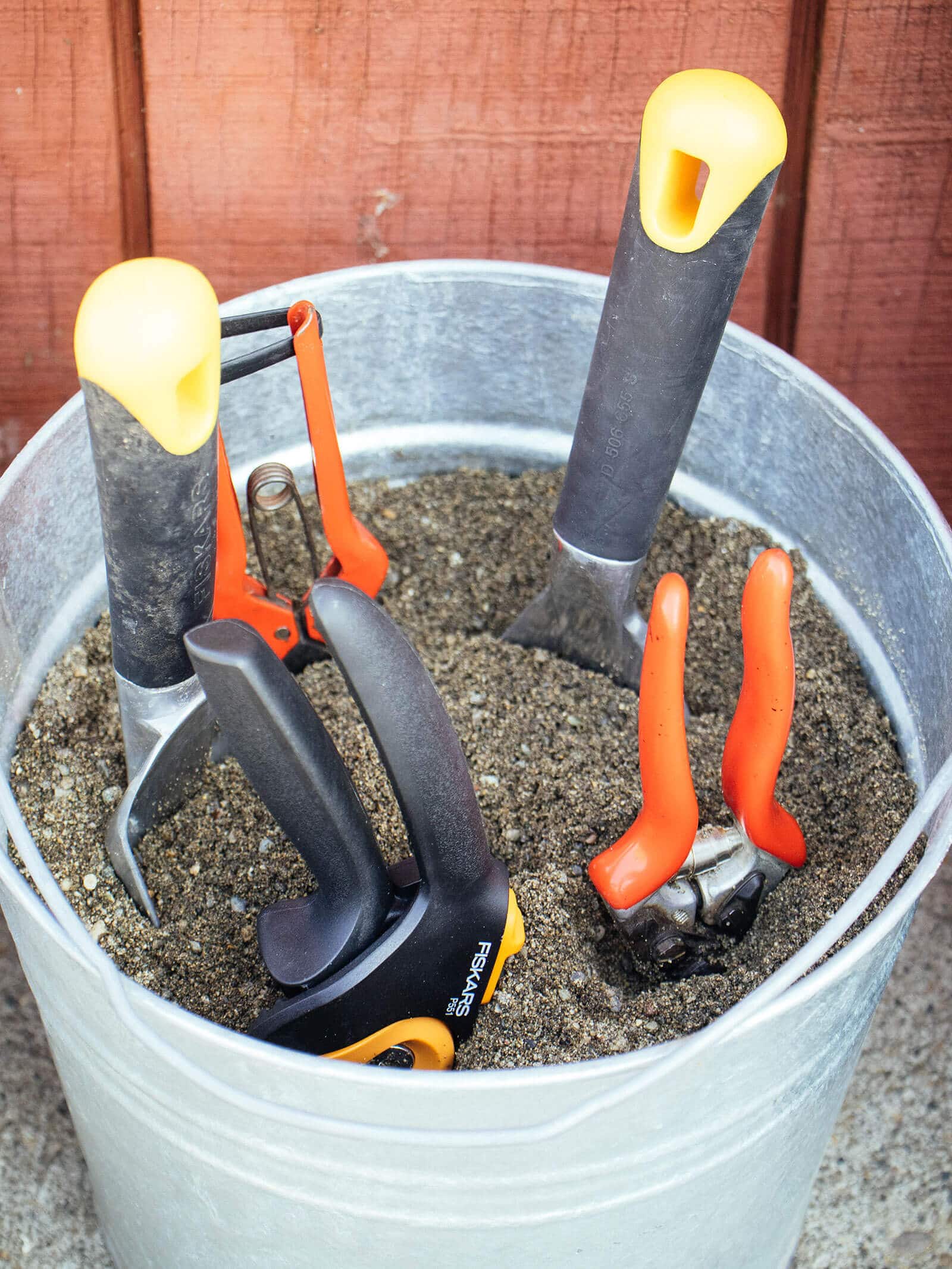
Use Oiled Sand for Hand Tools
For trowels, pruners, and cultivators:
– Fill a bucket with sand
– Mix in 1 cup of vegetable oil per gallon
– Insert metal parts into the mix
The oiled sand prevents moisture buildup and keeps tools ready for use. Replace the mix annually or when dirty.
Hang Large Tools to Preserve Shape
Shovels, rakes, hoes, and loppers should be hung on wall hooks or a pegboard. This prevents wooden handles from warping and keeps metal dry. Avoid leaning tools on damp floors.
Keep Storage Area Dry and Ventilated
Moisture causes rust—even on stainless steel. Store tools in a dry, well-ventilated shed or garage. In humid climates, use silica gel packs or a dehumidifier.
Winterize Tools for Long-Term Health
Perform Annual Deep Cleaning
Winter is the best time to prepare tools for spring. Follow this checklist:
– ✅ Clean every tool with soapy water
– ✅ Disinfect after handling diseased plants
– ✅ Remove rust with oil and steel wool
– ✅ Degrease sap and sticky residues
– ✅ Sharpen cutting edges
– ✅ Oil wooden handles to prevent cracking
– ✅ Store using oiled sand or hanging method
A few hours of winter maintenance extends tool life by years and ensures they’re ready when planting season arrives.
Safety Tips for Handling Disinfectants
Protect Yourself and Your Garden
- Bleach: Use in ventilated areas. Never mix with ammonia or vinegar.
- Alcohol: Keep away from flames and heat sources.
- TSP: Wear gloves and goggles. Wet granules cause chemical burns.
- Solvents (turpentine, lighter fluid): Use outdoors. Store safely away from children.
Always read labels. Use dedicated containers to avoid cross-contamination with food or water.
Key Takeaways for Healthy Garden Tools
Maximize Tool and Plant Health
- Always clean before disinfecting—dirt blocks disinfectants
- Use bleach for diseased plants—only it reliably kills viruses
- Wipe tools dry after dipping—prevents plant injury
- Rotate tools to maintain workflow
- Inspect regularly for rust, dullness, or damage
Healthy plants start with clean tools. By spending just minutes after each gardening session, you protect your investment, prevent disease outbreaks, and keep your garden thriving year after year. For science-backed advice, contact your local county Extension office—they offer free resources on plant health and sanitation.
Frequently Asked Questions About Disinfecting Garden Tools
Should I disinfect garden tools after every plant?
No, but you should disinfect between different plant species, varieties, or after handling diseased material. Use tool rotation to maintain efficiency—while one tool soaks, use another.
Does rubbing alcohol kill plant diseases?
Alcohol (70–100%) kills many bacteria and fungi but does not reliably kill plant viruses. Use it for healthy plants only. For diseased material, use bleach or a commercial horticultural disinfectant.
How long should I soak tools in bleach?
Soak in a 10% bleach solution (1:9 with water) for 30 seconds to 10 minutes. For high-risk situations (diseased plants), 10 minutes is recommended. Rinse thoroughly afterward to prevent corrosion.
Can I use Lysol to disinfect garden tools?
Lysol is convenient and non-corrosive, but there’s little research proving its effectiveness against plant-specific pathogens. It may work for light sanitation but is not recommended for infected plants.
What is the best way to store pruners and trowels?
Store hand tools in a bucket of oiled sand (1 cup vegetable oil per gallon of sand). This prevents rust and keeps them ready for use. Alternatively, hang them in a dry, ventilated area.
Do I need to sharpen tools after disinfecting?
Disinfecting doesn’t affect sharpness, but it’s a good time to inspect blades. Dull tools damage plants and increase disease risk. Sharpen annually or as needed using a file or whetstone.